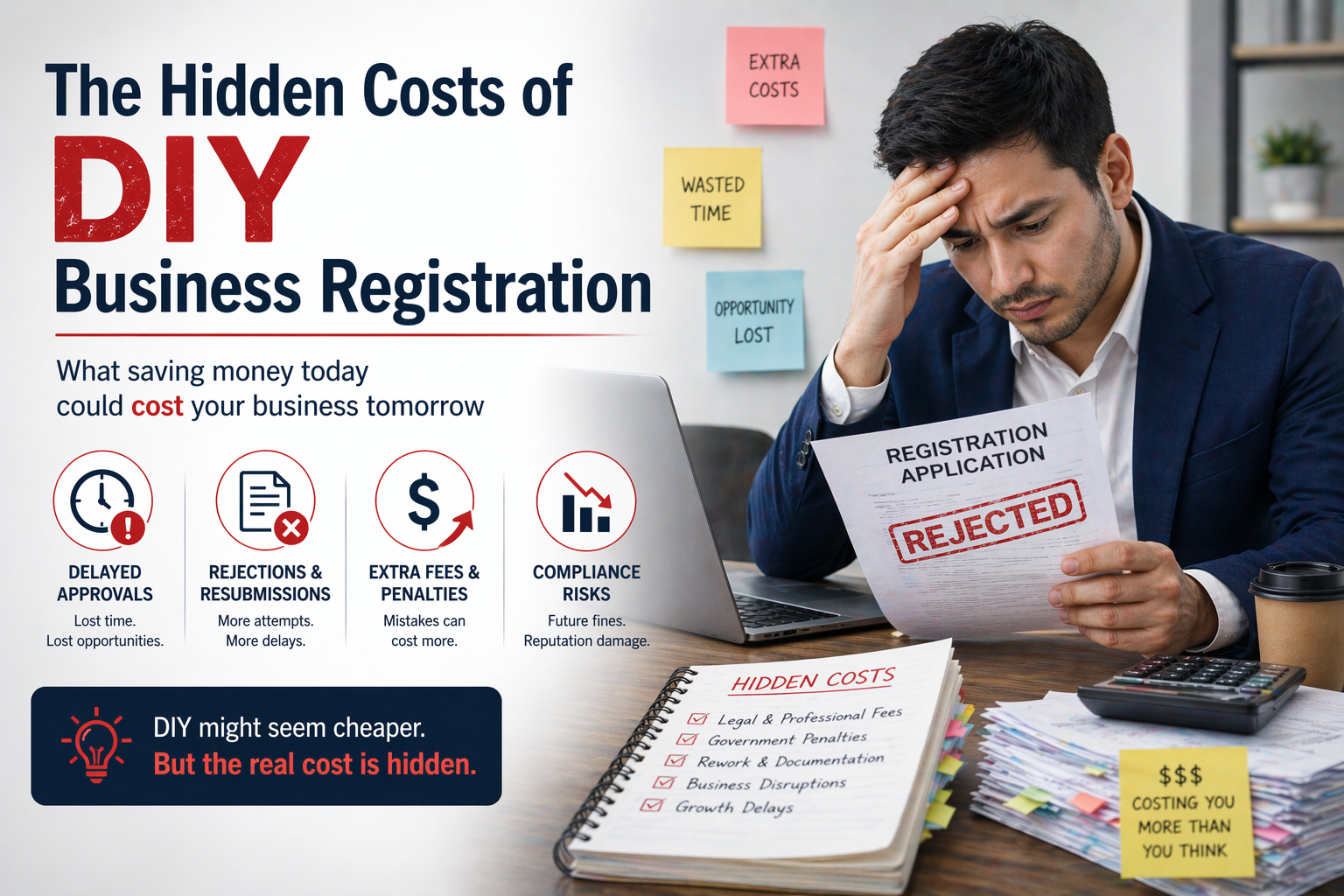
For many entrepreneurs in the Philippines, handling business registration on their own seems like a practical way to save money. At first glance, DIY (Do-It-Yourself) registration appears straightforward—fill out forms, submit documents, and wait for approval.
However, from a legal and practical standpoint, DIY registration often comes with hidden costs that are not immediately visible. These costs can outweigh the initial savings and may affect your business in the long run.
This article explains the true cost of DIY business registration—and why proper guidance matters.
The Illusion of Saving Money
DIY registration gives the impression that you are saving on professional fees. While this may be true initially, many entrepreneurs fail to consider the time, risk, and potential errors involved.
Business registration in the Philippines involves multiple agencies, including:
- Securities and Exchange Commission
- Department of Trade and Industry
- Bureau of Internal Revenue
Each agency has its own requirements, processes, and compliance standards.
1. Cost of Mistakes and Corrections
One of the biggest hidden costs is the cost of errors.
Common DIY mistakes include:
- Incorrect business structure
- Improper capital setup
- Inconsistent information across documents
- Wrong tax registration
Correcting these mistakes often requires:
- Refiling documents
- Paying additional fees
- Amending registrations
These costs can quickly exceed the savings from DIY registration.
2. Delays That Impact Your Business
Time is a valuable resource in business.
DIY registration often leads to:
- Rejected applications
- Multiple revisions
- Longer processing times
Delays can result in:
- Missed business opportunities
- Late start of operations
- Loss of potential income
The financial impact of delays is often underestimated.
3. Risk of Non-Compliance
Without proper knowledge of legal requirements, businesses may unknowingly violate regulations.
This includes:
- Operating without complete registration
- Failing to secure permits
- Missing tax obligations
Non-compliance can lead to:
- Penalties and fines
- Legal notices
- Business closure
4. Incorrect Business Structuring
Choosing the wrong structure at the start can have long-term consequences.
For example:
- Higher tax exposure
- Limited liability protection
- Difficulty attracting investors
Restructuring later is more complex and costly than getting it right initially.
5. Hidden Administrative Costs
DIY registration requires significant time and effort.
Entrepreneurs must:
- Research requirements
- Prepare documents
- Coordinate with agencies
- Follow up on applications
This time could otherwise be spent on:
- Growing the business
- Acquiring clients
- Developing products or services
Time lost is also a cost.
6. Lack of Strategic Planning
Business registration is not just a compliance task—it is a strategic decision.
Without professional guidance, business owners may:
- Miss opportunities for tax optimization
- Overlook eligibility for incentives (e.g., BOI or PEZA)
- Fail to plan for future growth
Proper planning adds long-term value.
7. Stress and Uncertainty
DIY registration often involves:
- Confusion over requirements
- Uncertainty about compliance
- Repeated follow-ups and corrections
This can create unnecessary stress, especially for first-time business owners.
Common Misconceptions
Many entrepreneurs believe:
- “It’s easy to do on my own.”
- “I’ll save more by not hiring professionals.”
- “Mistakes can be fixed later.”
In reality, these assumptions often lead to higher overall costs.
When Professional Guidance Matters
Seeking assistance can help you:
- Avoid costly errors
- Speed up the registration process
- Ensure full compliance
- Structure your business correctly from the start
Professional support is not just an expense—it is an investment in your business.
Final Thoughts
DIY business registration may seem cost-effective at first, but the hidden costs—mistakes, delays, penalties, and lost opportunities—can be significant.
For entrepreneurs in the Philippines, the smarter approach is to view business registration as a critical legal and strategic process, not just a task to complete.
In the long run, doing it right the first time is always more efficient and less expensive than fixing problems later.
Because in business, true savings come from accuracy, compliance, and proper planning—not shortcuts.
Navigating the business landscape in the Philippines can be both rewarding and intricate. Whether you’re embarking on a new venture or scaling up, ensuring that your corporate endeavors are in line with local regulations is paramount.
At CBOS Business Solutions Inc., we pride ourselves on simplifying these processes for our clients. As a seasoned professional services company, we offer comprehensive assistance with SEC Registration, Visa processing, and a myriad of other essential business requirements. Our team of experts is dedicated to ensuring that your business is compliant, well-established, and ready to thrive in the Philippine market.
Why venture into the complexities of business registration and compliance alone? Allow our team to guide you every step of the way. After all, your success is our commitment.
Get in touch today and let us be your partner in achieving your business goals in the Philippines.
Email Address: gerald.bernardo@cbos.com.ph
Mobile No.: +639270032851
You can also click this link to schedule a meeting.
Leave a Reply