Category: Blog
-

Are All Your Business Expenses Tax-Deductible? What Business Owners Should Know
“I paid for it using the company account, so it’s a business expense.” Not necessarily. One of the most common areas of confusion for business owners is the difference between paying for something through the business, recording it in the books, and determining its proper tax treatment. These are related questions, but they are not…
-
Board Resolutions and Secretary’s Certificates: Small Documents With Big Consequences
Someone from the company walks into a bank and says: “I am authorized to sign for the corporation.” The bank’s next question is predictable: “Can you show us the authority?” This is where corporate documentation matters. A corporation acts through natural persons, but not every director, shareholder, employee, or officer automatically has authority to bind…
-
BIR Audit Readiness: Documents Your Business Should Organize Before an Audit Happens
When businesses hear the word “audit,” the first reaction is often to start gathering documents. That is already too late to begin organizing them. Audit readiness should be part of ordinary accounting and tax compliance. A business that maintains organized records throughout the year is in a much better position to explain its transactions than…
-

BOI or PEZA? Start With Your Business Model, Not the Incentives
When businesses hear about Philippine investment incentives, the conversation often becomes focused on one question: “Which gives better incentives, BOI or PEZA?” That is understandable, but it can lead to the wrong analysis. The real question is: “Which investment framework fits the actual project?” BOI and PEZA registrations should be evaluated based on the company’s…
-
Common BIR Compliance Mistakes That Can Cost Philippine Businesses Money
Common BIR Compliance Mistakes That Can Cost Philippine Businesses Money Tax problems do not always begin with a major mistake. Sometimes they start with something small. A document was not submitted to accounting. A transaction was posted to the wrong account. A withholding obligation was overlooked. A registration detail was never updated. One isolated mistake…
-
Your Corporation Is Registered. What Happens Next?
Receiving an SEC Certificate of Incorporation feels like the finish line. For a new business owner, it is a major milestone. The corporation now exists as a juridical entity, the founders can finally see the company taking shape, and attention naturally shifts toward sales, hiring, banking, contracts, and operations. But from a compliance perspective, this…
-
Your Books vs. Your Tax Returns: Why the Numbers Must Reconcile
Here is a question every business owner should be able to answer: Do the numbers in your accounting records support the numbers reported in your tax returns? If the answer is “I don’t know,” that is something worth reviewing. Businesses generate financial information from several sources—books of accounts, invoices, bank records, tax returns, withholding schedules,…
-

Foreign-Owned Companies in the Philippines: What Investors Should Check Before Incorporation
A foreign investor who wants to establish a company in the Philippines will often ask one question first: “Can I own 100% of the company?” It is an understandable question, but it is rarely the best place to begin. The more useful question is: “What exactly will the Philippine company do?” In the Philippines, foreign…
-
BIR Tax Deadlines: Why Filing on Time Is Only Half of Tax Compliance
“We filed on time.” For a business owner, those words can provide a sense of relief. No missed deadline. No last-minute panic. Another tax return finished. But there is an important question that should come immediately afterward: Were the numbers correct? Meeting a deadline is important, but timely filing alone does not guarantee proper tax…
-
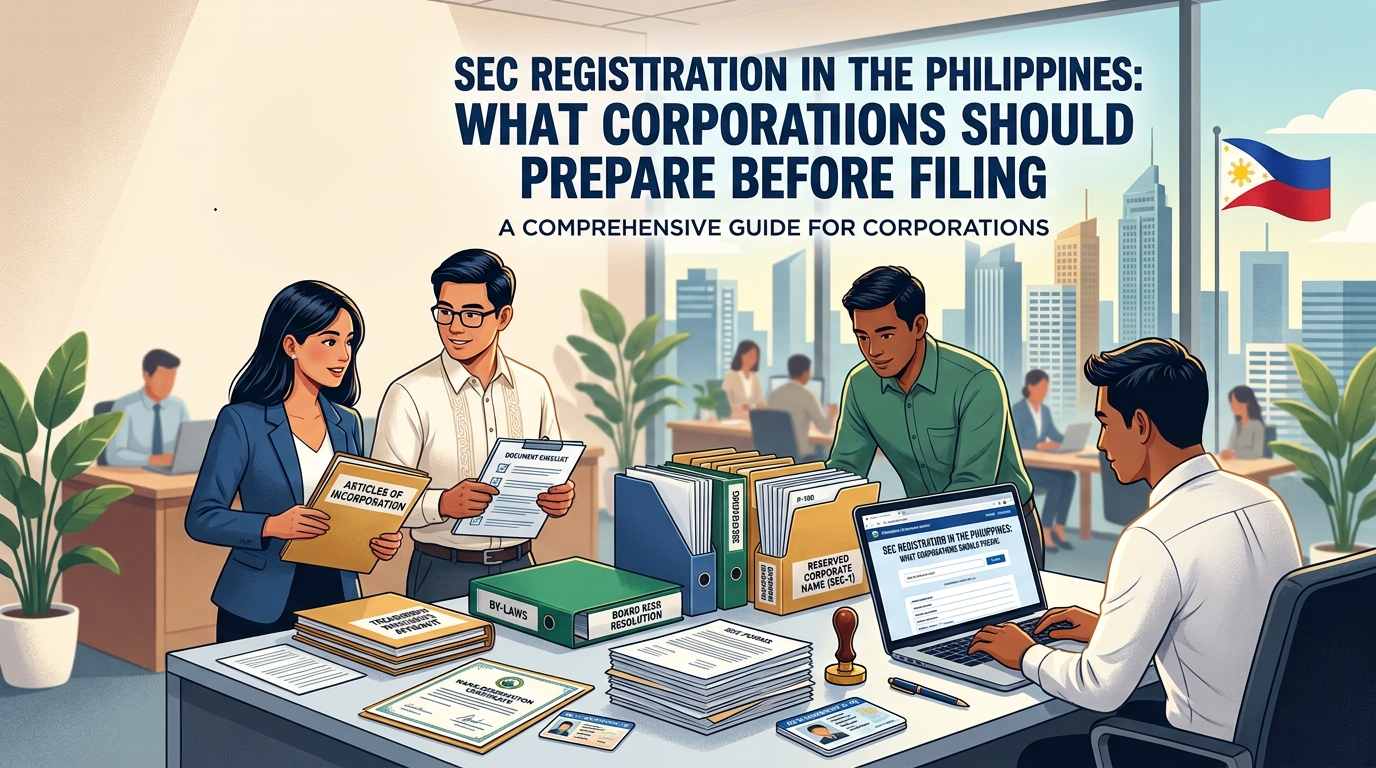
SEC Registration in the Philippines: What Corporations Should Prepare Before Filing
Starting a corporation in the Philippines often looks straightforward from the outside. Choose a company name, prepare the documents, file with the Securities and Exchange Commission, and wait for approval. In practice, however, many registration problems begin long before the application reaches the SEC. They usually start when the founders have not yet settled the…