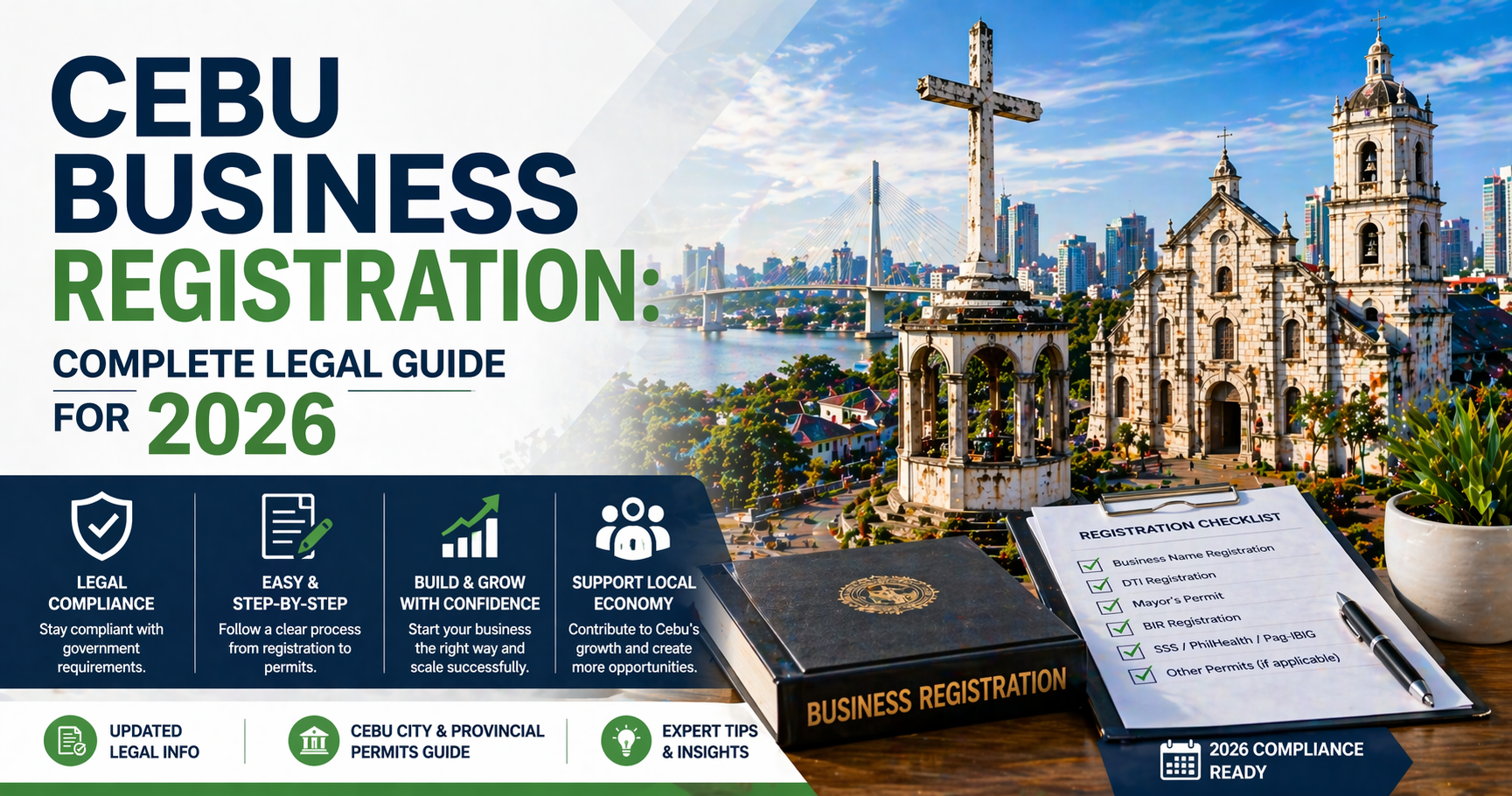
Starting a business in Cebu is a strategic move. As one of the Philippines’ fastest-growing economic hubs, Cebu offers strong opportunities for entrepreneurs, startups, and foreign investors. However, before you begin operations, it is essential to understand the legal process of business registration.
This guide provides a comprehensive, lawyer-style overview of how to legally register your business in Cebu in 2026—covering national and local requirements, compliance steps, and common pitfalls.
Why Business Registration Matters
Registering your business is not optional—it is a legal requirement. Proper registration allows your business to:
- Operate legally
- Issue official receipts
- Enter into enforceable contracts
- Open a business bank account
- Avoid penalties and closure
Failure to register properly can result in fines, legal exposure, and business interruption.
Step 1: Choose the Right Business Structure
Before registering, you must determine your business structure. This decision affects liability, taxation, and growth potential.
Common Structures in the Philippines:
- Sole Proprietorship – registered with the Department of Trade and Industry (DTI)
- Partnership – registered with the Securities and Exchange Commission (SEC)
- Corporation / One Person Corporation (OPC) – also registered with the SEC
Choosing the correct structure is critical to long-term success.
Step 2: Register Your Business Name
Your business name must be:
- Unique and not confusingly similar to existing entities
- Compliant with naming regulations
- Properly reserved and approved
For sole proprietors, this is done through DTI. For corporations and partnerships, it is processed through the SEC.
Step 3: Secure SEC or DTI Registration
Depending on your structure:
- DTI Registration for sole proprietors
- SEC Registration for corporations and partnerships
This step grants your business legal recognition.
For corporations, this includes:
- Articles of Incorporation
- By-laws
- Capital structure
- Appointment of directors and officers
Step 4: Register with the BIR
After securing SEC or DTI registration, you must register with the Bureau of Internal Revenue (BIR).
This includes:
- Obtaining a Tax Identification Number (TIN)
- Securing a Certificate of Registration (COR)
- Registering books of accounts
- Applying for Authority to Print (ATP) receipts
This step is required before you can legally issue invoices or receipts.
Step 5: Secure Cebu Local Permits
To operate in Cebu, you must obtain a Mayor’s Permit from the local government unit (LGU).
Common Requirements:
- Barangay Clearance
- Lease contract or proof of address
- Fire safety inspection
- Sanitary permit (if applicable)
Without a Mayor’s Permit, your business cannot legally operate within Cebu.
Step 6: Register with Other Government Agencies
If you plan to hire employees, you must register with:
- Social security and benefits agencies
- Other employment-related institutions
Compliance with labor regulations is mandatory for employers.
Step 7: Open a Business Bank Account
Once your registrations are complete, you can open a corporate bank account.
Banks typically require:
- SEC or DTI registration
- BIR Certificate of Registration
- Mayor’s Permit
- Corporate documents and board resolution
Incomplete requirements may delay account approval.
Step 8: Maintain Ongoing Compliance
Registration is only the beginning. Businesses must comply with ongoing requirements such as:
SEC Compliance (for corporations):
- General Information Sheet (GIS)
- Audited Financial Statements (AFS)
BIR Compliance:
- Monthly, quarterly, and annual tax filings
- Proper bookkeeping
Local Compliance:
- Annual renewal of Mayor’s Permit
Failure to comply may result in penalties or suspension.
Common Mistakes to Avoid
Many businesses in Cebu encounter delays or penalties due to:
- Incomplete or inconsistent documents
- Incorrect business structure
- Delayed BIR registration
- Failure to secure local permits
- Missing compliance deadlines
Avoiding these mistakes ensures smoother operations.
Timeline of Registration
While timelines may vary, a properly prepared registration typically takes:
- DTI/SEC Registration: a few days to a few weeks
- BIR Registration: 1–2 weeks
- Mayor’s Permit: 1–3 weeks
Delays often occur due to errors or incomplete requirements.
Final Thoughts
Registering your business in Cebu requires careful planning, accurate documentation, and strict compliance with national and local regulations.
From choosing the right structure to securing permits and maintaining compliance, every step plays a crucial role in building a legally sound and sustainable business.
For entrepreneurs and investors, the key takeaway is clear:
Start legal. Stay compliant. Grow confidently.
Proper business registration is not just a requirement—it is the foundation of long-term success in Cebu’s dynamic business environment.
Navigating the business landscape in the Philippines can be both rewarding and intricate. Whether you’re embarking on a new venture or scaling up, ensuring that your corporate endeavors are in line with local regulations is paramount.
At CBOS Business Solutions Inc., we pride ourselves on simplifying these processes for our clients. As a seasoned professional services company, we offer comprehensive assistance with SEC Registration, Visa processing, and a myriad of other essential business requirements. Our team of experts is dedicated to ensuring that your business is compliant, well-established, and ready to thrive in the Philippine market.
Why venture into the complexities of business registration and compliance alone? Allow our team to guide you every step of the way. After all, your success is our commitment.
Get in touch today and let us be your partner in achieving your business goals in the Philippines.
Email Address: gerald.bernardo@cbos.com.ph
Mobile No.: +639270032851
You can also click this link to schedule a meeting.
Leave a Reply