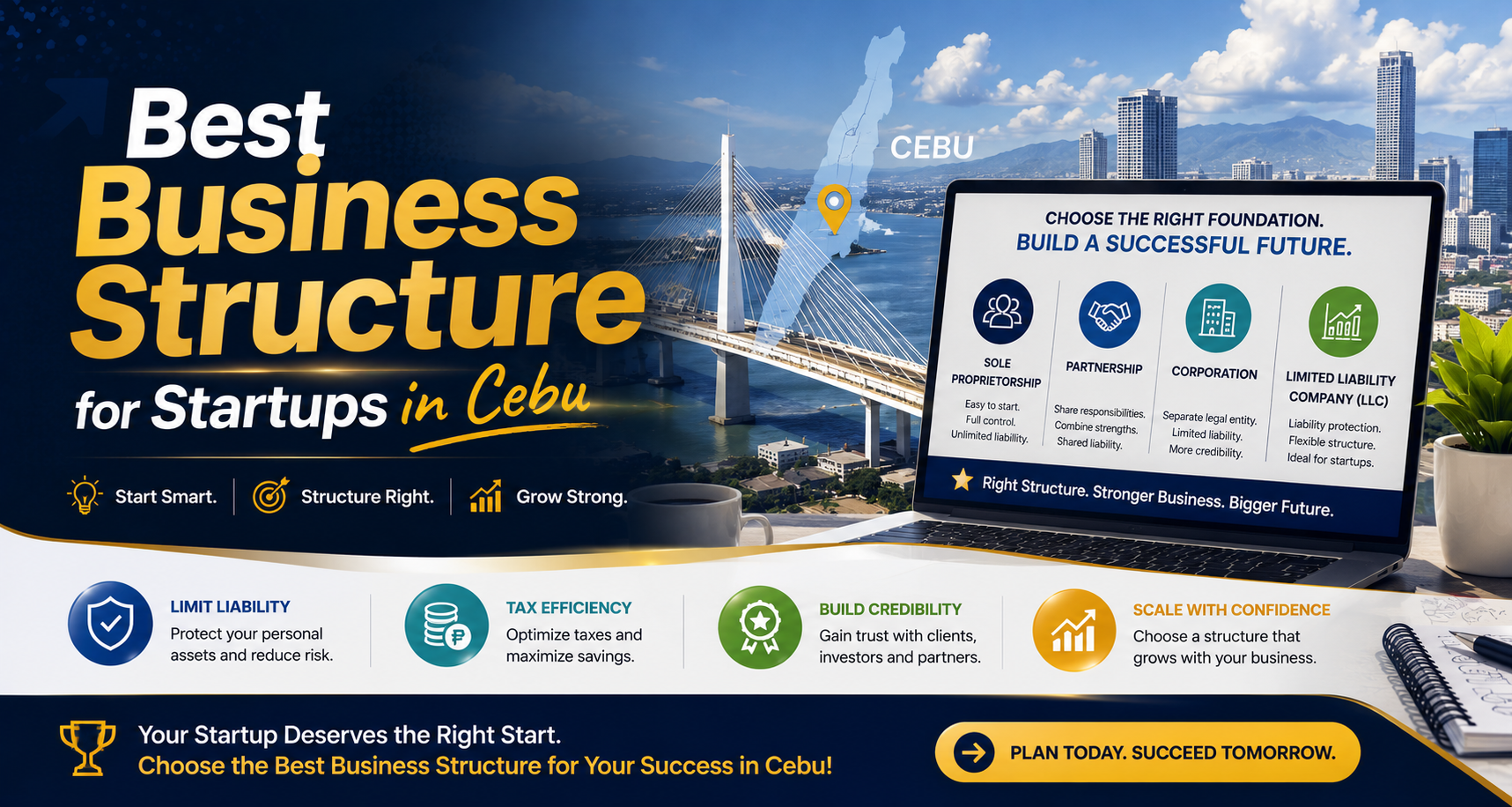
Starting a business in Cebu is exciting. With a rapidly growing economy, strong startup ecosystem, expanding IT-BPO sector, tourism opportunities, and increasing investor interest, Cebu continues to attract entrepreneurs from across the Philippines and abroad.
However, before launching operations, one of the most important decisions every founder must make is this:
What is the best business structure for your startup?
This is not just a paperwork decision. Your business structure affects:
- Taxes
- Liability
- Ownership rights
- Investor readiness
- Compliance obligations
- Future expansion
Choosing the wrong structure can create costly problems later, while choosing the right one can support growth from the beginning.
This guide explains the most common business structures for Cebu startups in 2026 and how to determine which one fits best.
Why Business Structure Matters
Your structure determines how your business legally exists and operates.
It affects:
- Who owns the business
- Who is liable for debts or lawsuits
- How taxes are handled
- How investors participate
- How decisions are made
Registration may involve the Department of Trade and Industry or the Securities and Exchange Commission depending on the chosen setup.
Common Business Structures for Cebu Startups
1. Sole Proprietorship
Best For:
- Freelancers
- Small online sellers
- Single-owner service businesses
- Very small startup operations
Advantages:
- Easier and faster to register
- Lower setup complexity
- Full owner control
Risks:
- No separate legal personality from the owner
- Personal assets may be exposed to business liabilities
- Harder to scale for investors or multiple owners
For very small startups testing a concept, this may work initially—but long-term growth may require restructuring later.
2. Partnership
Best For:
- Two or more founders working closely together
- Small collaborative ventures
Advantages:
- Shared capital and responsibilities
- Flexible management arrangements
Risks:
- Potential disputes among partners
- Shared liability exposure depending on structure
- Ownership disagreements if poorly documented
Partnerships require strong agreements to work well.
3. Corporation
Best For:
- Growth-focused startups
- Tech companies
- Investor-ready businesses
- Businesses planning long-term expansion
Advantages:
- Separate legal entity
- Better liability protection
- Easier ownership transfer through shares
- More attractive for investors
- Stronger long-term scalability
Considerations:
- More compliance requirements
- Corporate governance obligations
- Ongoing reportorial duties
For many serious Cebu startups, a corporation provides the strongest long-term foundation.
4. One Person Corporation (OPC)
Best For:
- Solo founders wanting liability protection
- Professionals and consultants
- Startups with one primary owner
Advantages:
- Separate legal personality
- Limited liability protection
- Single shareholder setup
- Cleaner than informal sole-owner corporate arrangements
Considerations:
- Corporate compliance still applies
- Requires proper record maintenance
For many solo startup founders in Cebu, OPCs have become highly attractive.
Which Structure Is Best for Cebu Startups?
The answer depends on several factors.
Best Structure Based on Startup Situation
If You Are Testing a Small Business Idea
A sole proprietorship may be enough temporarily.
Examples:
- Small online shop
- Freelance service
- Home-based startup
If You Plan to Raise Investors
A corporation is usually stronger.
Investors generally prefer:
- Share-based ownership
- Formal governance
- Scalable structure
If You Are a Solo Founder but Want Protection
An OPC may provide a strong balance between:
- Control
- Simplicity
- Liability protection
If Multiple Founders Are Involved
A corporation is often safer than informal arrangements because ownership and governance can be clearly documented.
Key Legal Factors Startups Should Consider
1. Liability Protection
Will personal assets be exposed?
2. Future Investors
Will you seek funding later?
3. Tax Implications
Will the structure support efficient compliance with the Bureau of Internal Revenue?
4. Ownership Clarity
Can ownership be clearly tracked and protected?
5. Scalability
Can the business expand without major restructuring?
Common Startup Mistakes in Cebu
- Using sole proprietorship for multi-owner businesses
- Delaying proper structure because “small pa man”
- No shareholder or founder agreements
- Mixing personal and business funds
- Ignoring long-term investor readiness
- Choosing based only on lowest setup cost
Short-term convenience can create long-term expense.
Why Many Cebu Startups Eventually Restructure
As startups grow, they often need:
- Investors
- Bank financing
- Additional owners
- Better liability protection
- Corporate credibility
Businesses that started informally may eventually spend significant money restructuring later.
Planning correctly early can reduce that cost.
Final Thoughts
The best business structure for your Cebu startup is the one that supports both your current operations and your future growth.
For many startups:
- Sole Proprietorship = simple testing phase
- OPC = strong solo-founder option
- Corporation = scalable long-term growth structure
The practical lesson is simple:
Choose a structure based on where you want the business to go—not just where it is today.
Because the strongest startups are not only innovative—they are legally built for growth from the beginning.
Navigating the business landscape in the Philippines can be both rewarding and intricate. Whether you’re embarking on a new venture or scaling up, ensuring that your corporate endeavors are in line with local regulations is paramount.
At CBOS Business Solutions Inc., we pride ourselves on simplifying these processes for our clients. As a seasoned professional services company, we offer comprehensive assistance with SEC Registration, Visa processing, and a myriad of other essential business requirements. Our team of experts is dedicated to ensuring that your business is compliant, well-established, and ready to thrive in the Philippine market.
Why venture into the complexities of business registration and compliance alone? Allow our team to guide you every step of the way. After all, your success is our commitment.
Get in touch today and let us be your partner in achieving your business goals in the Philippines.
Email Address: gerald.bernardo@cbos.com.ph
Mobile No.: +639270032851
You can also click this link to schedule a meeting.
Leave a Reply