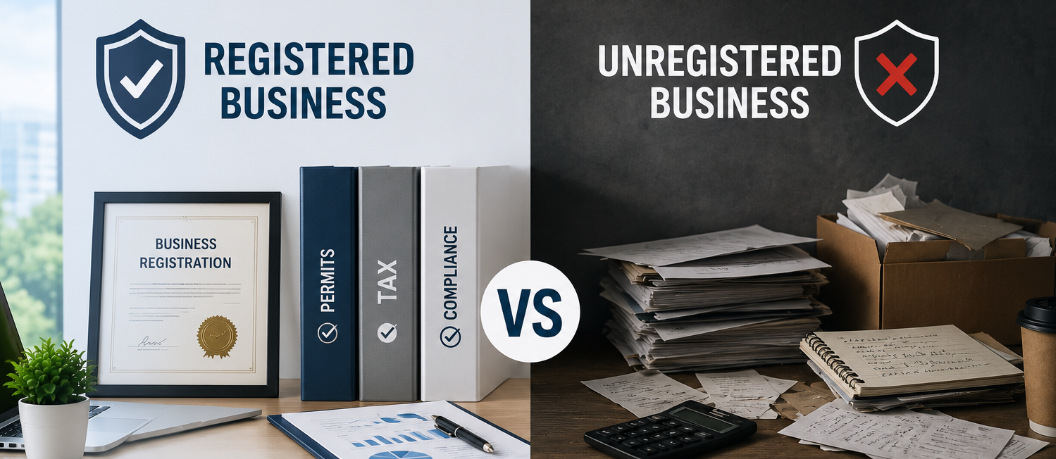
One of the first decisions entrepreneurs face when starting a business is whether to operate formally by registering their business or begin operating without completing the necessary legal requirements. While some business owners delay registration to save time or reduce initial costs, doing so can expose them to significant legal, financial, and operational risks.
Operating a registered business is not simply about complying with government regulations—it is about establishing a strong legal and financial foundation that supports long-term growth. From gaining customer trust to protecting business assets and accessing financing, registration provides advantages that informal businesses often cannot enjoy.
From a CPA and legal compliance perspective, understanding the differences between a registered and an unregistered business is essential for every entrepreneur. This article explains those differences and why registration is a strategic investment rather than just a legal obligation.
What Is a Registered Business?
A registered business is one that has complied with the legal requirements necessary to operate in the Philippines.
Depending on the business structure, this typically includes:
- Registration with the Department of Trade and Industry (DTI) for sole proprietorships
- Registration with the Securities and Exchange Commission (SEC) for corporations and partnerships
- Barangay Clearance
- Mayor’s Permit (Business Permit)
- Bureau of Internal Revenue (BIR) registration
- Employer registration with the Social Security System (SSS), PhilHealth, and Pag-IBIG Fund, if hiring employees
A registered business is legally recognized and authorized to conduct commercial activities under Philippine law.
What Is an Unregistered Business?
An unregistered business operates without completing one or more of the required registrations or permits.
Examples include:
- Selling products without obtaining the necessary registrations
- Offering services without registering with the BIR
- Operating a physical store without a Mayor’s Permit
- Running an online business without complying with applicable tax and registration requirements
Although many unregistered businesses generate income, they may face significant compliance, tax, and legal risks.
Registered vs. Unregistered Business: Key Differences
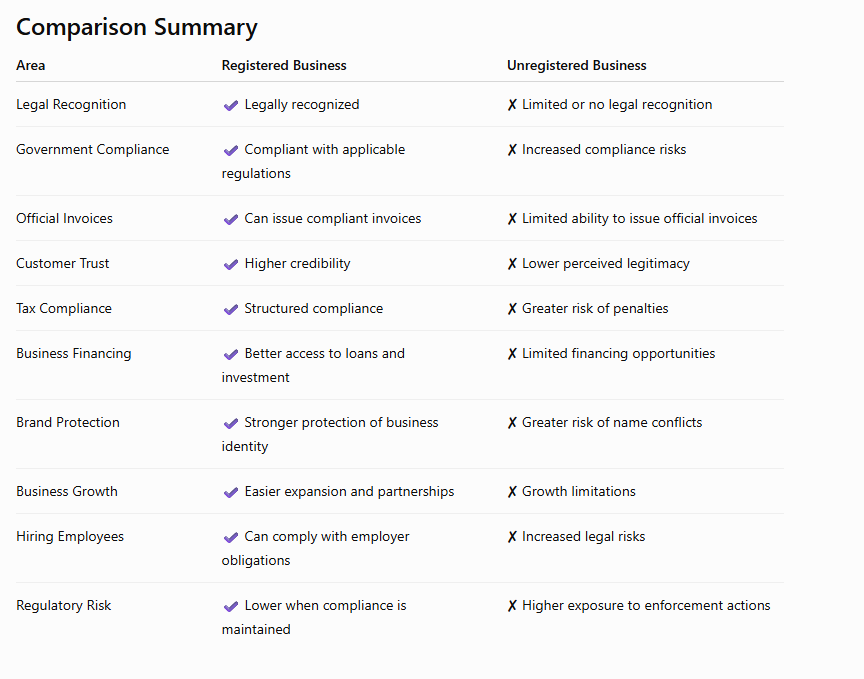
1. Legal Recognition
Registered Business
A registered business is legally recognized by the appropriate government agencies. It has the authority to conduct business, enter into contracts, and comply with regulatory requirements.
Unregistered Business
An unregistered business lacks formal legal recognition and may be operating in violation of applicable laws or local ordinances.
Why It Matters
Legal recognition provides legitimacy and establishes a foundation for lawful business operations.
2. Compliance with Government Regulations
Registered Business
Registered businesses comply with registration, licensing, tax, and reporting requirements imposed by government agencies.
Unregistered Business
Unregistered businesses may fail to meet legal obligations, increasing the risk of penalties, enforcement actions, and compliance issues.
Why It Matters
Compliance reduces legal risks and supports stable business operations.
3. Ability to Issue Official Invoices
Registered Business
Businesses registered with the Bureau of Internal Revenue (BIR) can issue compliant invoices or receipts in accordance with tax regulations.
Unregistered Business
An unregistered business generally cannot issue official invoices or receipts required by many customers and organizations.
Why It Matters
Corporate clients and government agencies often require proper invoicing before entering into business transactions.
4. Customer Trust and Credibility
Registered Business
Customers often view registered businesses as:
- Professional
- Reliable
- Transparent
- Committed to long-term operations
Unregistered Business
Customers may question the legitimacy and reliability of informal businesses.
Why It Matters
Trust plays a critical role in attracting and retaining customers.
5. Access to Financing
Registered Business
Banks and financial institutions typically require:
- Business registration documents
- Financial statements
- Tax records
- Business permits
before approving loans or credit facilities.
Unregistered Business
Access to formal financing is often limited because required documentation is unavailable.
Why It Matters
Financing supports business expansion, equipment purchases, and operational growth.
6. Tax Compliance
Registered Business
A registered business can comply with tax obligations by:
- Filing tax returns
- Maintaining accounting records
- Issuing official invoices
- Paying applicable taxes
Unregistered Business
Failure to register does not necessarily eliminate tax obligations. Instead, it may expose the business to assessments, penalties, and interest for non-compliance.
Why It Matters
Proper tax compliance reduces financial and legal risks.
7. Protection of Business Name
Registered Business
Business registration helps establish the legal use of a business name within the applicable scope of registration.
Unregistered Business
Without registration, another party may register a similar or identical name, creating confusion and weakening brand identity.
Why It Matters
A business name is a valuable asset that contributes to customer recognition and long-term brand value.
8. Business Growth Opportunities
Registered Business
Registered businesses are generally better positioned to:
- Expand operations
- Open additional locations
- Enter into partnerships
- Bid for government contracts
- Secure corporate clients
Unregistered Business
Growth opportunities may be limited because many organizations require proof of legal registration before entering into business relationships.
Why It Matters
Registration creates opportunities that informal businesses may be unable to access.
9. Hiring Employees
Registered Business
Employers can legally register employees with:
- Social Security System (SSS)
- PhilHealth
- Pag-IBIG Fund
and comply with labor regulations.
Unregistered Business
Hiring employees without meeting employer registration and labor obligations may expose the business to legal liabilities and penalties.
Why It Matters
Compliance protects both employers and employees.
10. Risk of Government Penalties
Registered Business
Businesses that maintain compliance reduce the likelihood of regulatory penalties.
Unregistered Business
Operating without registration may result in:
- Administrative fines
- Tax penalties
- Interest charges
- Suspension of operations
- Closure orders
Why It Matters
The cost of non-compliance often exceeds the cost of proper registration.
11. Legal Protection
Registered Business
Depending on the chosen business structure, registration may provide legal protections, including clearer ownership documentation and, for corporations or One Person Corporations (OPCs), a legal distinction between the business and its owners.
Unregistered Business
Informal operations may leave owners more exposed to legal disputes and financial liabilities.
Why It Matters
Choosing the appropriate legal structure can help manage business risks more effectively.
12. Long-Term Sustainability
Registered Business
A registered business is built for long-term operations.
It is better prepared to:
- Attract investors
- Expand into new markets
- Build customer confidence
- Maintain regulatory compliance
Unregistered Business
Operating informally may limit the business’s ability to grow and adapt as opportunities arise.
Why It Matters
Sustainable businesses require strong legal and financial foundations.
Common Misconceptions About Business Registration
“I’m Too Small to Register”
Business size does not automatically determine whether registration or tax obligations apply. Many small businesses benefit from registering early to establish credibility and support future growth.
“I Only Sell Online”
Online businesses may still be subject to registration and tax requirements, depending on the nature of their operations.
“Registration Is Just Additional Paperwork”
Registration is more than a legal requirement—it provides access to opportunities, protections, and systems that support business success.
“I’ll Register Once My Business Becomes Successful”
Waiting until problems arise can increase compliance risks and make the registration process more complicated.
Why Registration Is a Smart Business Decision
Registering your business is not simply about complying with government regulations—it is about protecting everything you are working to build.
A registered business benefits from:
- Greater customer confidence
- Improved legal protection
- Better financial management
- Access to financing
- Stronger business opportunities
- Reduced regulatory risk
- Enhanced long-term credibility
These advantages position entrepreneurs for sustainable growth and greater business resilience.
Build Your Business on a Strong Foundation
Every successful business starts with a solid legal and financial foundation. While operating informally may appear easier in the beginning, the long-term advantages of business registration far outweigh the short-term convenience of remaining unregistered.
Registration protects your business, strengthens your credibility, supports tax compliance, and opens doors to opportunities that informal businesses often cannot access. It demonstrates your commitment to professionalism and prepares your enterprise for sustainable growth.
At CBOS, we help entrepreneurs navigate every stage of business formation—from DTI and SEC registration to BIR compliance, bookkeeping, payroll, tax advisory, and ongoing business support. Our experienced professionals are committed to helping you establish a compliant, credible, and future-ready business.
Thinking of making your business official? Contact CBOS today and let our experts guide you through the registration process so you can build your business with confidence and peace of mind.
Leave a Reply