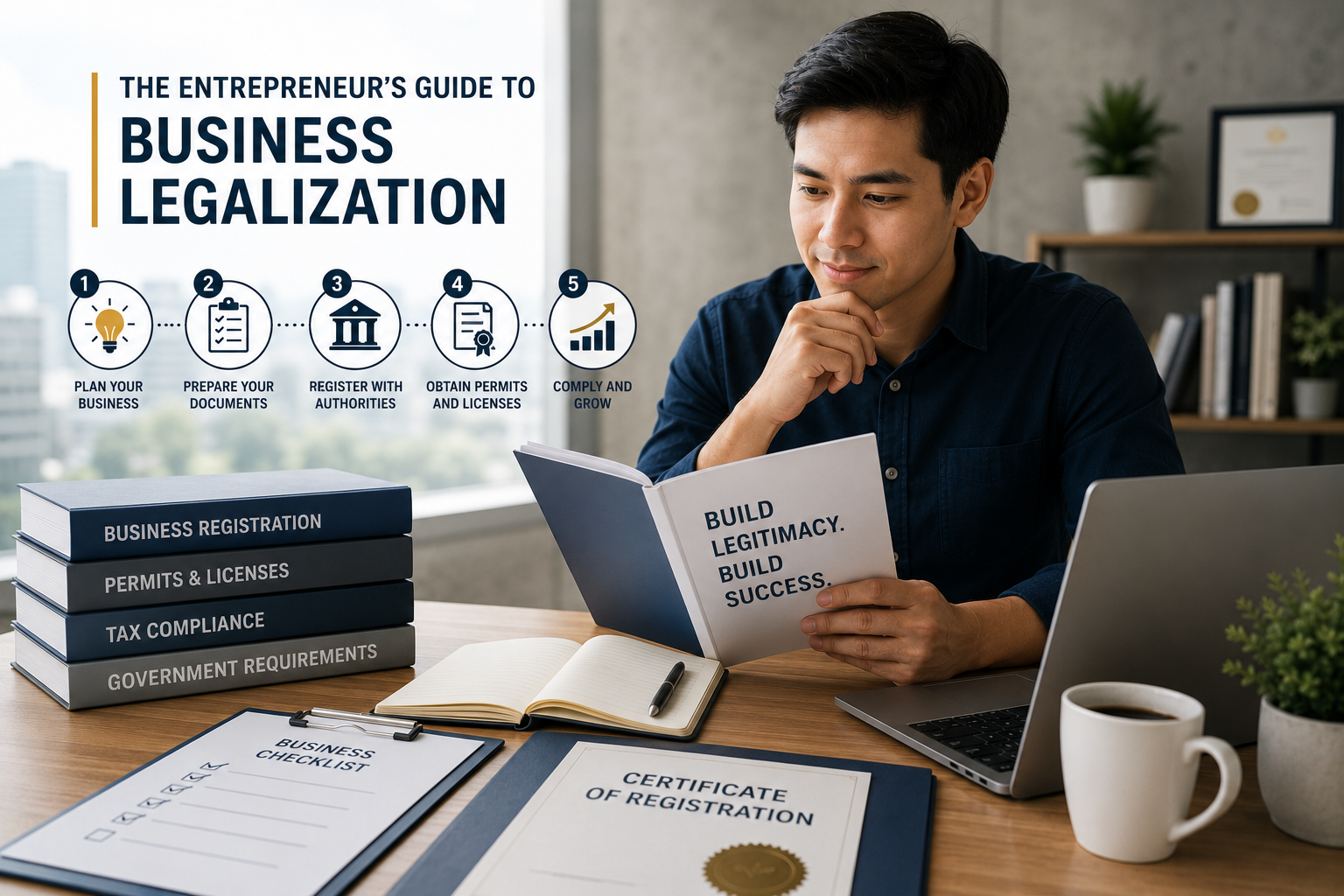
Every successful business starts with an idea, but only those built on a solid legal foundation are positioned for long-term growth and sustainability. Whether you’re launching a home-based business, opening a retail store, operating an online shop, or offering professional services, one of the most important milestones is legalizing your business.
Many entrepreneurs delay business legalization because they believe it is expensive, complicated, or unnecessary during the early stages. Others assume they can formalize their business once it becomes profitable. While these misconceptions are common, operating without proper registration can expose a business to legal risks, tax issues, missed opportunities, and financial penalties.
From a CPA and legal compliance perspective, business legalization is not merely about securing permits—it is about creating a legally recognized enterprise that can grow with confidence, attract customers, and comply with Philippine laws and regulations.
This comprehensive guide explains the business legalization process in the Philippines, why it matters, and how entrepreneurs can establish a compliant and future-ready business.
What Does Business Legalization Mean?
Business legalization refers to the process of complying with all legal and regulatory requirements necessary to operate a business lawfully in the Philippines.
This generally includes:
- Choosing the appropriate business structure
- Registering the business name
- Obtaining local government permits
- Registering with the Bureau of Internal Revenue (BIR)
- Complying with labor and employment regulations, when applicable
- Maintaining ongoing tax and regulatory compliance
Business legalization transforms an informal business into a recognized legal enterprise.
Why Business Legalization Matters
Many entrepreneurs focus on generating sales but overlook the legal framework needed to support sustainable growth.
Legalizing your business provides numerous advantages, including:
- Legal recognition
- Improved customer confidence
- Compliance with tax laws
- Access to financing
- Eligibility for government and corporate contracts
- Stronger brand protection
- Better opportunities for business expansion
Rather than viewing legalization as a regulatory burden, entrepreneurs should see it as an investment in their business’s future.
Step 1: Choose the Right Business Structure
One of the first decisions an entrepreneur must make is selecting the appropriate legal structure.
The structure you choose affects:
- Ownership
- Tax obligations
- Management
- Liability
- Future expansion
Sole Proprietorship
Suitable for individuals operating their own businesses.
Advantages
- Simple registration
- Lower administrative requirements
- Full control over business decisions
Consideration
The owner generally bears personal responsibility for business obligations.
Partnership
Suitable for two or more individuals operating a business together.
Advantages
- Shared capital
- Combined expertise
- Shared management responsibilities
Consideration
A written partnership agreement is strongly recommended to define rights and responsibilities.
Corporation
Ideal for businesses planning significant growth or involving multiple shareholders.
Advantages
- Separate legal personality
- Limited liability
- Easier ownership transfer
Consideration
Corporations have more extensive reportorial and governance requirements.
One Person Corporation (OPC)
An OPC allows a single entrepreneur to enjoy many of the advantages of a corporation.
Advantages
- Separate legal personality
- Limited liability
- Greater business credibility
Step 2: Register Your Business Name
Once you’ve selected a business structure, the next step is registering your business name.
Sole Proprietorship
Register with the Department of Trade and Industry (DTI).
Corporation or Partnership
Register with the Securities and Exchange Commission (SEC).
Choosing a unique and legally acceptable business name helps establish your identity in the marketplace and supports future branding efforts.
Step 3: Secure Local Government Permits
Businesses must obtain the necessary permits from the local government where they will operate.
These commonly include:
- Barangay Clearance
- Mayor’s Permit (Business Permit)
Depending on the type of business, additional requirements may include:
- Fire Safety Inspection Certificate (FSIC)
- Sanitary Permit
- Health Certificates
- Occupancy Permit
- Environmental or zoning clearances
Requirements vary depending on the location and nature of the business.
Step 4: Register with the Bureau of Internal Revenue (BIR)
BIR registration is essential for tax compliance.
Upon registration, businesses generally:
- Obtain a Certificate of Registration (COR)
- Register books of accounts, when required
- Comply with invoicing requirements
- Determine applicable tax obligations
Taxes may include:
- Income Tax
- Value-Added Tax (VAT) or Percentage Tax
- Withholding Taxes
- Documentary Stamp Tax, where applicable
Maintaining compliance with tax laws is a continuing obligation throughout the life of the business.
Step 5: Establish Proper Financial Systems
Business legalization goes beyond registration documents.
Every business should establish sound financial management systems.
This includes:
- Organized bookkeeping
- Accounting records
- Expense monitoring
- Revenue tracking
- Cash flow management
- Financial reporting
Accurate financial records support better business decisions while ensuring compliance with tax regulations.
Step 6: Register as an Employer (If Applicable)
Businesses employing workers must register with the appropriate government agencies.
These generally include:
- Social Security System (SSS)
- PhilHealth
- Pag-IBIG Fund
Employers must also comply with labor laws concerning:
- Employee benefits
- Payroll
- Mandatory contributions
- Employment records
Failure to comply may result in administrative penalties and labor disputes.
Step 7: Protect Your Business Assets
Legalizing your business also involves protecting valuable assets.
Consider safeguarding:
- Business name
- Logo
- Trademark
- Website domain
- Contracts
- Customer information
- Intellectual property
Protecting these assets strengthens your competitive position and reduces legal risks.
Step 8: Maintain Ongoing Compliance
Business legalization is not a one-time event.
Entrepreneurs must continue meeting their legal obligations, including:
- Filing tax returns
- Renewing business permits
- Maintaining books of accounts
- Issuing compliant invoices
- Keeping corporate records, when applicable
- Remitting employee contributions
- Complying with industry-specific regulations
Regular compliance reviews help prevent penalties and operational disruptions.
Legal Benefits of Business Legalization
Legalizing your business provides important protections that informal businesses often lack.
These include:
Legal Recognition
Your business is formally recognized under Philippine law.
Contractual Protection
You can enter into and enforce business agreements with greater confidence.
Stronger Customer Confidence
Clients and customers are more likely to trust legally established businesses.
Better Access to Financing
Banks and investors generally require proof of registration before extending credit or investment.
Reduced Compliance Risks
Proper registration minimizes exposure to penalties and enforcement actions.
Foundation for Growth
A legalized business is better prepared to expand, hire employees, and pursue larger opportunities.
Common Mistakes Entrepreneurs Make
Many businesses encounter avoidable issues during the legalization process.
Delaying Registration
Waiting until the business grows often creates unnecessary compliance challenges.
Choosing the Wrong Business Structure
Selecting an unsuitable structure may affect taxes, liability, and future expansion.
Ignoring Local Permits
Some entrepreneurs complete national registrations but overlook local government requirements.
Mixing Personal and Business Finances
Using personal accounts for business transactions complicates bookkeeping and tax compliance.
Neglecting Bookkeeping
Poor financial records increase the risk of reporting errors and compliance issues.
Failing to Seek Professional Advice
Complex registration, tax, and regulatory matters often benefit from guidance from qualified professionals.
Business Legalization Checklist
Before launching your business, ensure you have completed the following:
Business Formation
✔ Select the appropriate legal structure
✔ Register your business name with the DTI or SEC
Local Government Compliance
✔ Obtain Barangay Clearance
✔ Secure a Mayor’s Permit
✔ Complete additional permits required for your industry
Tax Compliance
✔ Register with the BIR
✔ Understand your tax obligations
✔ Maintain books of accounts
✔ Comply with invoicing requirements
Financial Management
✔ Open a business bank account
✔ Implement bookkeeping procedures
✔ Monitor financial performance
Employment Compliance
✔ Register with SSS, PhilHealth, and Pag-IBIG, if hiring employees
✔ Maintain payroll compliance
Business Protection
✔ Protect your business name and intellectual property
✔ Use written contracts and service agreements
Frequently Asked Questions
Can I Operate While Waiting for My Registration?
Entrepreneurs should complete the required registrations and permits before commencing business operations to avoid compliance issues and potential penalties.
Do Home-Based and Online Businesses Need to Be Legalized?
Depending on the nature of their activities, home-based and online businesses may still be subject to registration, tax, and local government requirements.
How Long Does the Business Legalization Process Take?
The timeline varies depending on the business structure, completeness of submitted documents, processing times of government agencies, and local government requirements.
Should I Handle the Process Myself?
Some entrepreneurs complete the process independently. However, businesses with complex structures, multiple owners, foreign investment, or specialized regulatory requirements often benefit from professional legal and accounting assistance.
Legalize Your Business and Build for the Future
Business legalization is more than a legal obligation—it is the foundation of a successful enterprise. By completing the proper registrations, securing the necessary permits, maintaining accurate financial records, and complying with tax and labor laws, entrepreneurs can operate with confidence and position their businesses for long-term growth.
A legalized business is better equipped to earn customer trust, attract investors, access financing, and seize new opportunities in an increasingly competitive marketplace.
At CBOS, we help entrepreneurs navigate every stage of the business legalization process. From DTI and SEC registration to BIR compliance, local permits, bookkeeping, payroll, tax advisory, and ongoing business support, our experienced professionals are committed to helping businesses operate legally and grow sustainably.
Ready to make your business official? Contact CBOS today and let our experts simplify the business legalization process, ensure full compliance, and help you build a strong foundation for lasting success.
Leave a Reply