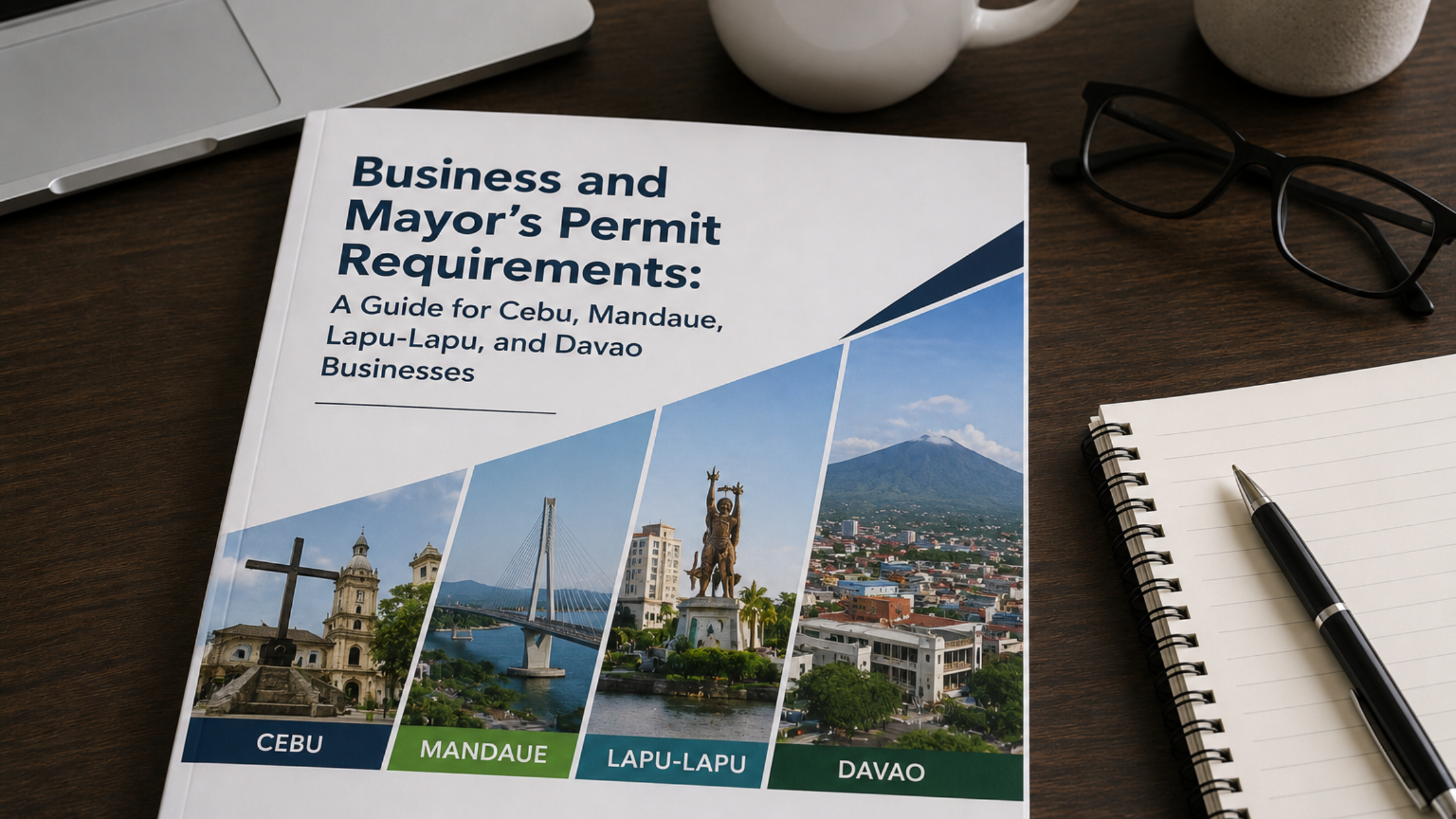
Registering your company with the SEC or DTI does not automatically authorize you to operate from a particular location.
Businesses in the Philippines must also comply with the requirements of the Local Government Unit (LGU) where their establishment is located.
For businesses operating in Cebu City, Mandaue City, Lapu-Lapu City, or Davao City, this normally means completing the applicable local business registration process and securing a Business or Mayor’s Permit, together with supporting clearances and inspections.
Requirements can differ considerably between LGUs, so knowing what to expect before signing a lease or opening a location can save a business substantial time.
What Is a Business or Mayor’s Permit?
A Business Permit, often referred to as a Mayor’s Permit, is an authorization issued by the applicable city or municipality allowing a business to operate within its jurisdiction.
The process helps the LGU determine whether a business complies with local regulations involving matters such as:
Zoning and land use
Building and occupancy requirements
Fire safety
Sanitation
Local taxes and fees
Environmental requirements
Business-specific regulations
The precise requirements depend on the city and the nature, size, and location of the business.
Why Your Business Location Matters
Location is one of the most important considerations when obtaining a local permit.
A property being available for rent does not necessarily mean every type of business can legally operate there.
Before committing to a commercial location, businesses should determine whether their intended activity is permitted under the applicable zoning and land-use rules.
This is where Locational or Zoning Clearance becomes important.
Locational and Zoning Clearance
A Locational or Zoning Clearance confirms that the proposed business activity is compatible with the zoning classification and regulations applicable to the property.
The LGU may review factors such as:
Property location
Type of business activity
Building use
Floor area
Parking or access requirements
Land-use classification
Applicable zoning restrictions
Problems at this stage can create significant delays, particularly when the property’s approved use does not match the proposed business activity.
Businesses should therefore investigate zoning requirements before investing heavily in renovations, signage, equipment, or a long-term lease.
Fire Safety Inspection Certificate
Fire safety compliance is another critical part of establishing and maintaining a business location.
Depending on the applicable process, businesses may need to coordinate with the Bureau of Fire Protection (BFP) and satisfy fire-safety requirements associated with their establishment and permit application.
Inspection and compliance considerations can include:
Fire extinguishers
Emergency exits
Exit signage
Electrical safety
Fire detection or alarm systems
Occupancy and building characteristics
Other required fire-protection equipment
Requirements vary according to the establishment and applicable fire-safety regulations.
Business owners should avoid treating the fire inspection as an administrative formality. Deficiencies identified during inspection may need to be corrected before the necessary certification or clearance can be issued.
Sanitary Permit
Businesses may also be required to obtain a Sanitary Permit or satisfy local health and sanitation requirements.
This is especially important for businesses involved in food, hospitality, personal care, healthcare, and other activities where sanitation directly affects employees or the public.
Depending on the LGU and business activity, requirements may include inspections, health-related documentation, sanitary facilities, waste-management measures, or other supporting documents.
Cebu City Business Permit Requirements
Businesses operating in Cebu City must follow the registration and renewal procedures prescribed by the Cebu City Government.
The exact documentation will depend on whether the business is new or renewing, its legal structure, its location, and the type of activity conducted.
Businesses should specifically confirm requirements involving zoning or locational approval, fire safety, sanitation, barangay documentation, occupancy or building-related documents, and assessment of applicable local taxes and fees.
Mandaue City Business Permit Requirements
Businesses located in Mandaue City fall under Mandaue City’s local permitting system.
Because Mandaue contains significant commercial and industrial activity, businesses should pay particular attention to whether their location and proposed activity comply with local zoning and building-use requirements.
Businesses with warehouses, manufacturing facilities, workshops, or other specialized premises may face requirements different from a conventional office.
Lapu-Lapu City Business Permit Requirements
Companies operating in Lapu-Lapu City must comply with the requirements established by the Lapu-Lapu City Government.
Location can be particularly important for businesses operating in tourism, hospitality, retail, food service, manufacturing, or establishments located within developments that may have their own property and occupancy documentation.
As with other LGUs, businesses should confirm the exact current requirements directly with the city’s Business Permits and Licensing Office or relevant local offices.
Davao City Business Permit Requirements
Businesses operating in Davao City must complete Davao City’s applicable business-permitting requirements.
The process may involve several city offices or regulatory clearances depending on the nature and location of the establishment.
Businesses should verify zoning, fire-safety, sanitation, occupancy, environmental, and industry-specific requirements before assuming that a standard documentary checklist will apply to their establishment.
New Registration vs. Annual Renewal
Obtaining your initial Business/Mayor’s Permit does not end your local compliance responsibilities.
Business permits are generally subject to annual renewal, and businesses need to monitor the applicable LGU’s renewal period, documentary requirements, assessments, and payment deadlines.
Changes to the business may also trigger additional requirements.
For example, relocating, expanding the premises, changing the business activity, or modifying the corporate information may require updates with the LGU and potentially other government agencies.
Avoiding Permit Delays
A practical approach is to organize the process in advance:
Confirm that the intended business activity is allowed at the proposed location.
Prepare corporate or DTI registration documents.
Secure applicable barangay documentation.
Determine zoning, building, occupancy, fire-safety, and sanitation requirements.
Prepare lease or property documentation.
Complete the LGU’s application and assessment process.
Pay the required local taxes and regulatory fees.
Complete required inspections and obtain the final permit or supporting certificates.
The exact sequence can vary by LGU and business type.
Local Compliance Is Part of Doing Business
Business permits should not be viewed as paperwork to deal with after opening.
They are an essential part of determining whether your establishment can legally operate in its chosen location.
For businesses in Cebu City, Mandaue, Lapu-Lapu, and Davao City, early coordination with the appropriate LGU can prevent costly problems with leases, renovations, inspections, and opening schedules.
Compliance note: LGU procedures, fees, forms, required clearances, online portals, and documentary requirements can change and may differ according to the business activity and property. Verify current requirements directly with the relevant city government, BPLO, BFP, and other responsible agencies before filing.
Leave a Reply