Category: Blog
-

SEC Extension Office Workarounds: Cebu vs. Davao Comparison Guide
Setting up a domestic corporation or One Person Corporation (OPC) in the Philippines is now handled primarily online via the SEC’s eSPARC portal. However, once your digital application passes initial review, you must navigate the physical compliance step: submitting hard copies of signed and notarized registration documents to receive your physical Certificate of Incorporation. For…
-

Ease of Doing Business & “Negative List” FSIC Rules
Fast-Tracking Your Cebu Business: How the BFP “Negative List” Speeds Up Your Mayor’s Permit Securing a Fire Safety Inspection Certificate (FSIC) used to be one of the biggest bottlenecks for launching a new storefront or office in Cebu. Business owners spent weeks waiting on physical site inspections before the Business Permit and Licensing Office (BPLO)…
-

BOI vs. PEZA Under CREATE MORE: Why Cebu Tech Firms Are Going Location-Free
Choosing between the Board of Investments (BOI) and the Philippine Economic Zone Authority (PEZA) used to be straightforward: export-focused firms went to PEZA, while domestic market players chose the BOI. The expanded CREATE MORE (Corporate Recovery and Tax Incentives for Enterprises Maximize Opportunities for Reinvigorating the Economy) law changed this dynamic—making BOI registration increasingly attractive…
-

The 2026–2028 SIPP Visayas Launch: What Priority Investment Means for Cebu Enterprises
The Board of Investments (BOI) officially rolled out its Strategic Investment Priority Plan (SIPP) regional roadshow in Metro Cebu. Operating under Memorandum Order No. 47, the 2026–2028 SIPP defines which industrial projects qualify for maximum national tax incentives. Frontier Sectors & High-Priority Tiers Unlike earlier frameworks that focused primarily on post-pandemic economic recovery, the 2026–2028…
-
Step-by-Step: Local Business Licensing for Corporate Branches in Cebu City
Establishing a SEC-registered corporate branch or secondary office in Cebu requires navigating the local government licensing process. While SEC setup handles national corporate existence, local operational legitimacy requires securing a Mayor’s Business Permit via Cebu City’s eBPLS (Electronic Business Permit and Licensing System). Essential Pre-Filing Documentation Before logging into the eBPLS portal, corporate administrative teams…
-

Maximizing ROI: Leveraging the CREATE MORE Act for Cebu Investments
Navigating corporate taxation in the Philippines changed dramatically with the enforcement of the CREATE MORE (Corporate Recovery and Tax Incentives for Enterprises Maximize Opportunities for Reinvigorating the Economy) law. For technology firms and export enterprises in Cebu, understanding how to pair SEC registration with PEZA (Philippine Economic Zone Authority) accreditation is critical to unlocking tax…
-
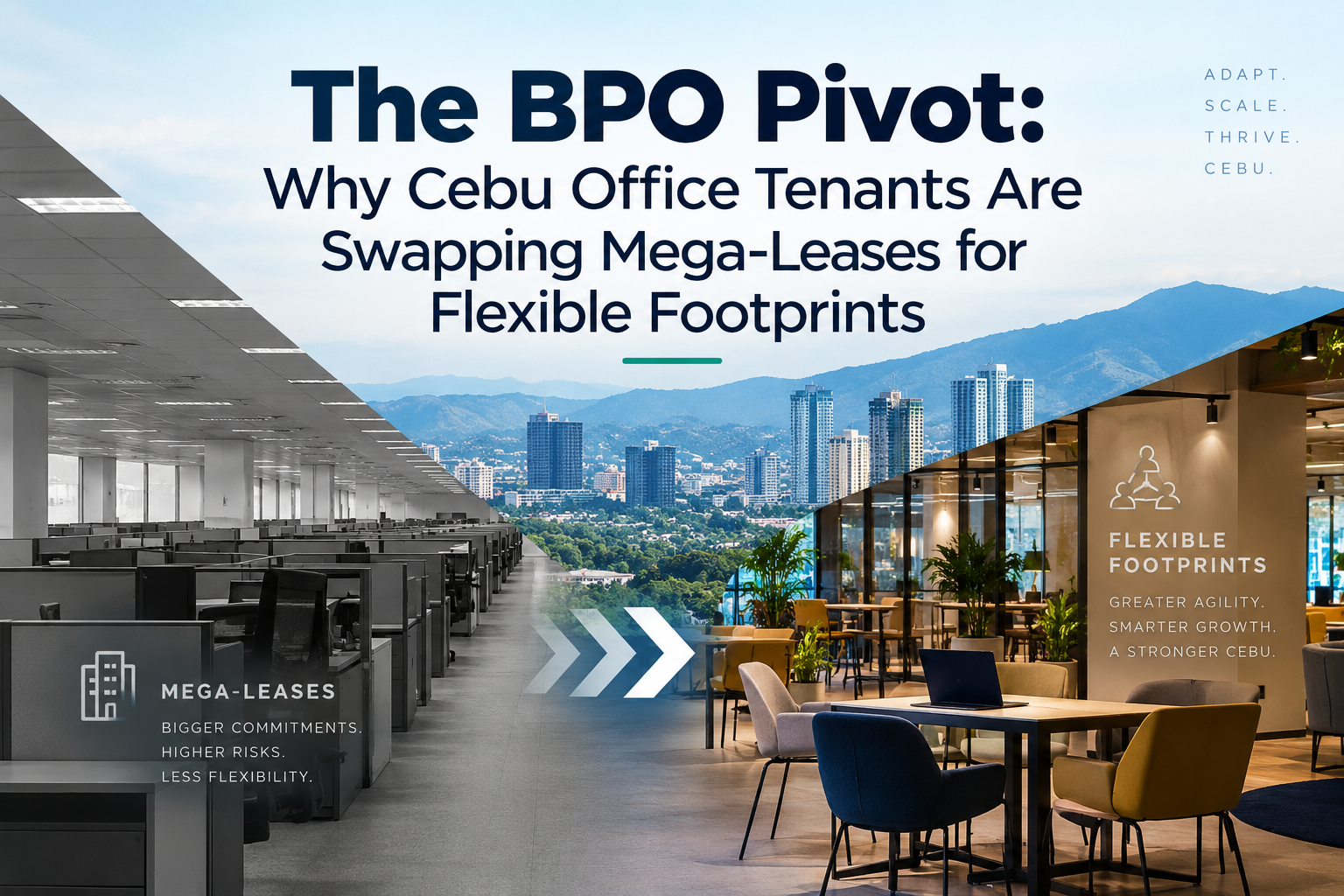
The BPO Pivot: Why Cebu Office Tenants Are Swapping Mega-Leases for Flexible Footprints
For over a decade, Cebu’s IT-BPM sector expanded by locking down massive, multi-floor plates in prime office towers. Today, a structural shift is taking place across Cebu IT Park and Cebu Business Park. As artificial intelligence platforms and automated workflow tools streamline routine operations, BPO firms are moving away from traditional 5,000–10,000 square meter leases.…
-

SEC Beneficial Ownership & HARBOR: Avoiding the ₱2 Million Non-Compliance Trap
Transparency regulations require Philippine corporations to disclose the natural persons who ultimately control or own the business. The SEC enforces strict Beneficial Ownership disclosure requirements, making compliance an essential operational priority. Parameter Standard Requirement Reporting Threshold Natural persons owning or controlling 20% or more of voting rights or capital stock. Filing Channel Mandatory submission via…
-

Cebu’s Corporate Tech Surge: Pairing SEC Setup with PEZA Incentives
Cebu functions as the IT-BPM, shared services, and maritime hub of the Visayas. Corporate setups in locations like Cebu IT Park, Cebu Business Park, or the Mactan Economic Zone (MEZ) often combine SEC registration with ecozone accreditation. The Role of PEZA and the CREATE MORE Act To maximize cost efficiency, tech and export-oriented firms register…
-

Scaling in Mindanao: Navigating Davao City’s Digitized Business Permits
Davao City remains the primary economic anchor for Mindanao, drawing commercial real estate, logistics, and agribusiness ventures. Operating a corporation in Davao requires matching SEC compliance with local municipal licensing through the Davao City Business Bureau. SEC Certificate of Incorporation (eSPARC) │ ▼ Barangay Clearance (Davao City District Office) │ ▼ Davao City eEBTS Portal…