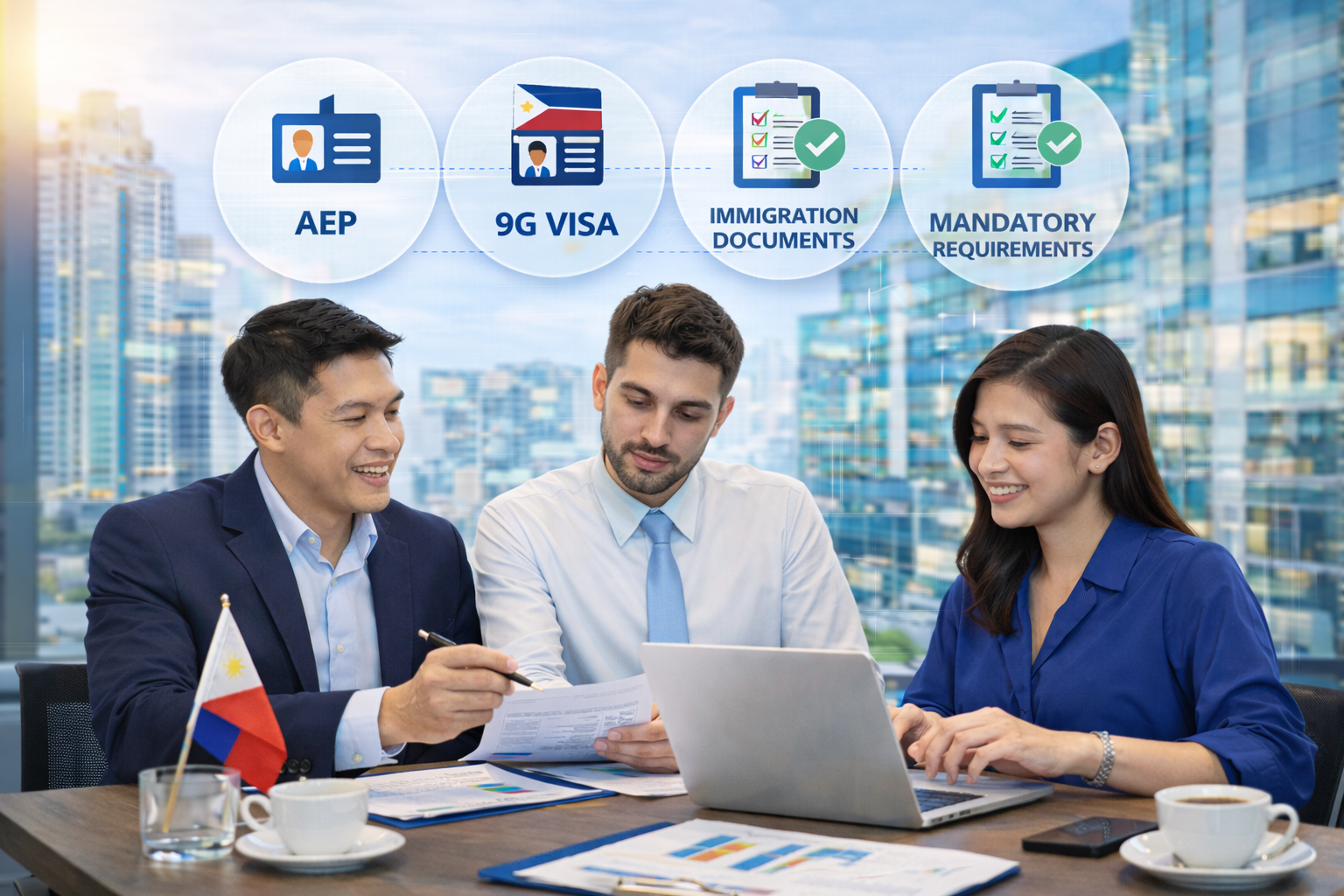
Hiring foreign talent can bring valuable expertise, global perspective, and specialized skills to a growing business. Many companies in the Philippines—particularly in technology, manufacturing, hospitality, and outsourcing—rely on foreign professionals to strengthen their operations.
However, employing a foreign national in the Philippines is not as simple as offering a job contract. Philippine law requires employers to comply with immigration and labor regulations before a foreign worker can legally begin employment.
If your company plans to hire a foreign employee, this immigration guide will help you understand the essential legal requirements and avoid costly compliance issues.
Understanding the Legal Framework for Foreign Employment
Foreign nationals who wish to work in the Philippines must secure proper authorization from the government. The two primary requirements are:
An Alien Employment Permit (AEP) issued by the Department of Labor and Employment
A 9G Pre-arranged Employment Visa issued by the Bureau of Immigration
These permits ensure that foreign workers are legally authorized to work in the country and that their employment does not disadvantage qualified Filipino workers.
Employers must carefully follow these procedures before the foreign national begins working.
Step 1: Secure an Alien Employment Permit (AEP)
The Alien Employment Permit (AEP) is typically the first requirement for hiring a foreign worker.
Issued by the Department of Labor and Employment, the AEP confirms that:
The position cannot be readily filled by a qualified Filipino worker
The employer is legally operating in the Philippines
The foreign employee possesses specialized skills or qualifications necessary for the role
The permit is generally valid for one to three years, depending on the employment contract.
Without an approved AEP, a foreign national cannot legally engage in employment in the Philippines.
Step 2: Apply for the 9G Working Visa
After securing the AEP, the foreign employee must obtain a 9G Pre-arranged Employment Visa from the Bureau of Immigration.
This visa allows the foreign national to:
Legally reside in the Philippines
Work for the sponsoring company
Remain in the country for the duration of their employment
The 9G visa is usually issued with a validity of one to three years, subject to renewal depending on the employment arrangement.
It is important to note that the visa is company-specific. If the foreign employee changes employers, a new visa process may be required.
Step 3: Employer Responsibilities and Compliance
Employers hiring foreign nationals must comply with several regulatory obligations.
These include:
Maintaining valid corporate registration with the Securities and Exchange Commission or other relevant agencies
Ensuring tax compliance with the Bureau of Internal Revenue
Reporting employment changes to the appropriate government agencies
Renewing permits and visas before expiration
Failure to comply with immigration regulations may result in penalties, visa cancellation, or deportation of the foreign worker.
For companies, non-compliance may also lead to administrative fines and legal complications.
Common Mistakes Companies Should Avoid
Many companies encounter delays or legal issues due to simple mistakes during the immigration process. Some common errors include:
Allowing a foreign national to work before obtaining an AEP
Filing incomplete or incorrect documentation
Misunderstanding visa classifications
Failing to renew permits on time
Hiring foreign workers without proper company registration
Proper planning and legal guidance can prevent these problems and ensure smooth processing.
Why Proper Immigration Compliance Matters
Following the correct immigration procedures protects both the employer and the foreign worker.
Legal compliance ensures:
The employee can work without immigration issues
The company avoids penalties and regulatory problems
Business operations continue without disruption
The employer maintains a strong reputation with government agencies
For companies expanding in the Philippines, compliance with immigration regulations is an essential part of responsible corporate governance.
Final Thoughts
Hiring foreign professionals can significantly strengthen a company’s capabilities, but it must be done within the legal framework established by Philippine labor and immigration laws.
By securing the proper permits and visas—particularly the Alien Employment Permit and 9G Working Visa—businesses can ensure their foreign employees are authorized to work legally in the Philippines.
Understanding the process in advance allows companies to avoid delays, protect their operations, and maintain full compliance with government regulations.
For employers planning to hire foreign talent, obtaining professional guidance during the application process can help ensure that every requirement is handled correctly and efficiently.
Navigating the business landscape in the Philippines can be both rewarding and intricate. Whether you’re embarking on a new venture or scaling up, ensuring that your corporate endeavors are in line with local regulations is paramount.
At CBOS Business Solutions Inc., we pride ourselves on simplifying these processes for our clients. As a seasoned professional services company, we offer comprehensive assistance with SEC Registration, Visa processing, and a myriad of other essential business requirements. Our team of experts is dedicated to ensuring that your business is compliant, well-established, and ready to thrive in the Philippine market.
Why venture into the complexities of business registration and compliance alone? Allow our team to guide you every step of the way. After all, your success is our commitment.
Get in touch today and let us be your partner in achieving your business goals in the Philippines.
Email Address: gerald.bernardo@cbos.com.ph
Mobile No.: +639270032851
You can also click this link to schedule a meeting.
Leave a Reply