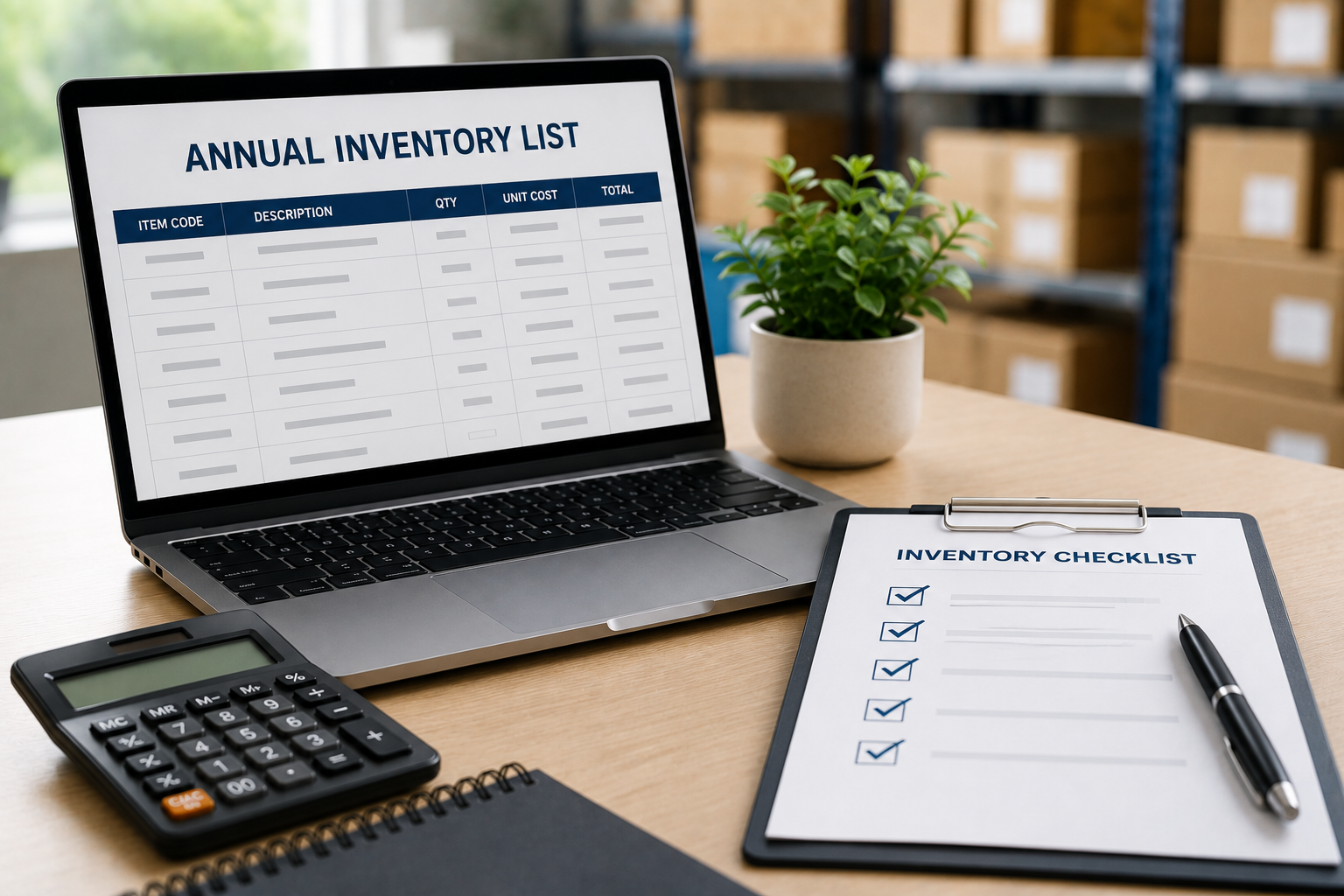
For many businesses, inventory represents one of the largest assets reflected in their financial statements. Whether you operate a retail store, wholesale business, manufacturing company, construction firm, or distribution enterprise, maintaining accurate inventory records is not only essential for sound financial management but also for compliance with the Bureau of Internal Revenue (BIR).
The Annual Inventory List (AIL) is an important reportorial requirement for certain taxpayers. It enables the BIR to verify the accuracy of inventory balances reported in tax returns and financial statements, assess the proper computation of Cost of Goods Sold (COGS), and identify inconsistencies that may warrant further examination.
Unfortunately, many businesses either overlook this requirement or submit incomplete or inaccurate inventory reports. These errors can lead to compliance issues, penalties, or increased scrutiny during a BIR tax audit.
This guide explains who is generally required to file an Annual Inventory List, the purpose of inventory reporting, common filing mistakes, and practical steps to ensure accurate reconciliation.
Important Note: Inventory reporting requirements, filing thresholds, formats, and deadlines may change through Revenue Regulations, Revenue Memorandum Circulars (RMCs), Revenue Memorandum Orders (RMOs), or other BIR issuances. Businesses should always consult the latest official BIR guidance applicable to their circumstances.
What Is the Annual Inventory List?
The Annual Inventory List is a report submitted to the BIR that provides detailed information about a taxpayer’s inventory at the close of the taxable year.
Depending on the nature of the business, the inventory may include:
- Merchandise inventory
- Raw materials
- Work-in-process
- Finished goods
- Supplies
- Spare parts
- Goods held for resale
The report allows the BIR to compare inventory records with financial statements, tax returns, and Books of Accounts.
Why Does the BIR Require an Annual Inventory List?
Inventory has a direct effect on taxable income.
Inventory balances influence:
- Cost of Goods Sold (COGS)
- Gross Profit
- Net Taxable Income
- Value-Added Tax (VAT) reporting
- Financial Statements
An inaccurate inventory balance may overstate or understate taxable income, making inventory one of the areas commonly reviewed during tax examinations.
The Annual Inventory List helps the BIR determine whether reported inventory figures are supported by adequate records.
Who Is Generally Required to File?
The obligation to submit an Annual Inventory List generally applies to taxpayers that maintain inventories and meet the reporting requirements prescribed by the BIR.
These commonly include businesses engaged in:
- Retail
- Wholesale
- Manufacturing
- Importation
- Distribution
- Construction
- Trading
- Food and beverage operations
- Businesses maintaining inventories for sale or production
The specific filing requirement depends on applicable BIR regulations, the taxpayer’s business activities, and other prescribed criteria.
Businesses should verify whether they are required to submit an inventory list based on the latest BIR issuances.
What Information Is Usually Included?
An Annual Inventory List typically contains detailed information describing the inventory on hand at year-end.
Depending on the nature of the business, this may include:
- Item descriptions
- Product codes or stock numbers
- Unit of measure
- Quantity on hand
- Unit cost
- Total inventory value
- Inventory classification
- Warehouse or storage location, where applicable
The inventory details should agree with the accounting records and financial statements.
Why Inventory Reconciliation Is Important
Submitting an inventory report is only one part of the compliance process.
Businesses should ensure that inventory balances reconcile across all accounting records.
Inventory should agree with:
- Books of Accounts
- Inventory subsidiary ledgers
- General Ledger
- Trial Balance
- Financial Statements
- Cost of Goods Sold
- Annual Income Tax Return
Any unexplained differences may raise questions during a tax audit.
Common Errors in Annual Inventory List Submission
Many businesses encounter compliance issues because of avoidable mistakes.
1. Inventory Does Not Match Financial Statements
One of the most common errors occurs when the inventory reported to the BIR differs from the inventory shown in the Statement of Financial Position.
These inconsistencies often arise because:
- Inventory adjustments were not recorded.
- Physical counts were incomplete.
- Accounting records were not updated.
The inventory list should always reconcile with the audited or year-end financial records.
2. Incomplete Physical Inventory Count
Some businesses estimate inventory instead of performing an actual physical count.
This increases the risk of:
- Missing inventory
- Duplicate inventory
- Incorrect quantities
- Inventory shrinkage
- Unsupported adjustments
Regular physical inventory counts improve reporting accuracy.
3. Incorrect Inventory Valuation
Inventory should be valued using the accounting method consistently applied by the business and in accordance with applicable accounting standards and tax rules.
Errors often occur when businesses:
- Use inconsistent costing methods
- Fail to update unit costs
- Include obsolete inventory without appropriate consideration
- Misclassify inventory items
Improper valuation affects taxable income and financial reporting.
4. Failure to Reconcile Cost of Goods Sold
Inventory directly affects the computation of Cost of Goods Sold (COGS).
Businesses should verify that:
Beginning Inventory
+ Purchases
− Ending Inventory
= Cost of Goods Sold
If inventory balances are inaccurate, COGS and taxable income may also be incorrect.
5. Missing Supporting Documents
Inventory reports should be supported by documentation such as:
- Stock cards
- Warehouse records
- Receiving reports
- Delivery receipts
- Purchase invoices
- Production reports
- Inventory count sheets
Supporting documents help substantiate reported inventory balances during an audit.
6. Late Submission
Failure to submit the Annual Inventory List within the applicable deadline may expose the taxpayer to administrative penalties under applicable BIR regulations.
Businesses should monitor annual filing schedules as part of their overall compliance calendar.
How to Conduct Proper Inventory Reconciliation
Inventory reconciliation should be performed before preparing year-end tax reports.
Step 1: Perform a Physical Inventory Count
Count all inventory on hand.
Include:
- Finished goods
- Raw materials
- Merchandise
- Supplies
- Work-in-process
Investigate any unusual shortages or excess quantities.
Step 2: Compare Physical Counts with Inventory Records
Verify that physical quantities agree with:
- Inventory subsidiary ledger
- Warehouse records
- Accounting system
Any discrepancies should be investigated and properly documented.
Step 3: Update Accounting Records
Record legitimate inventory adjustments arising from:
- Inventory shrinkage
- Damaged goods
- Obsolete inventory
- Counting errors
Proper approval should be obtained before recording adjustments.
Step 4: Reconcile with the General Ledger
Ensure that inventory balances agree with:
- General Ledger
- Trial Balance
- Financial Statements
Accounting records should accurately reflect year-end inventory.
Step 5: Review Cost of Goods Sold
Confirm that inventory adjustments have been properly reflected in the computation of Cost of Goods Sold.
Accurate COGS ensures that taxable income is correctly determined.
Best Practices for Inventory Compliance
Businesses can strengthen inventory reporting by adopting the following practices.
Maintain Perpetual Inventory Records
Update inventory movements regularly rather than waiting until year-end.
Conduct Periodic Cycle Counts
Quarterly or monthly inventory counts help identify discrepancies before year-end.
Separate Inventory Duties
Whenever practical, assign different personnel to:
- Receiving
- Warehousing
- Inventory recording
- Inventory counting
Proper segregation of duties strengthens internal controls.
Use Inventory Management Software
Modern inventory systems improve:
- Stock monitoring
- Quantity tracking
- Inventory valuation
- Reconciliation
- Reporting accuracy
Automation also reduces manual errors.
Maintain Complete Documentation
Keep organized copies of:
- Purchase invoices
- Receiving reports
- Delivery receipts
- Stock cards
- Inventory count sheets
- Warehouse reports
Good documentation supports inventory balances during tax examinations.
Annual Inventory Compliance Checklist
Before submitting an Annual Inventory List, confirm that:
- A physical inventory count has been completed.
- Inventory records reconcile with warehouse records.
- Inventory balances agree with the General Ledger.
- Financial Statements reflect the correct inventory amount.
- Cost of Goods Sold has been properly computed.
- Inventory valuation has been reviewed.
- Supporting documents are complete.
- Inventory adjustments have been approved and recorded.
- Filing requirements and deadlines have been verified.
- Internal review has been completed before submission.
Using a checklist reduces the risk of reporting errors.
How Professional Tax and Accounting Advice Can Help
Inventory reporting often requires coordination among accounting, warehouse, procurement, operations, and management.
A Certified Public Accountant (CPA) or tax adviser can assist with:
- Reviewing inventory reconciliation
- Evaluating inventory valuation methods
- Preparing supporting schedules
- Ensuring compliance with current BIR regulations
- Identifying potential tax risks before filing
Professional guidance helps businesses strengthen both financial reporting and tax compliance.
Final Thoughts
The Annual Inventory List is more than a regulatory requirement—it is an important component of accurate financial reporting and tax compliance. Because inventory directly affects Cost of Goods Sold, gross profit, and taxable income, errors in inventory records can have significant consequences during a BIR audit.
Businesses that maintain accurate inventory systems, perform regular physical counts, reconcile accounting records, and organize supporting documentation throughout the year are far better prepared to meet their reporting obligations with confidence. By integrating inventory management into the broader tax compliance process, companies not only reduce regulatory risks but also gain better visibility into their operations and financial performance.
Leave a Reply