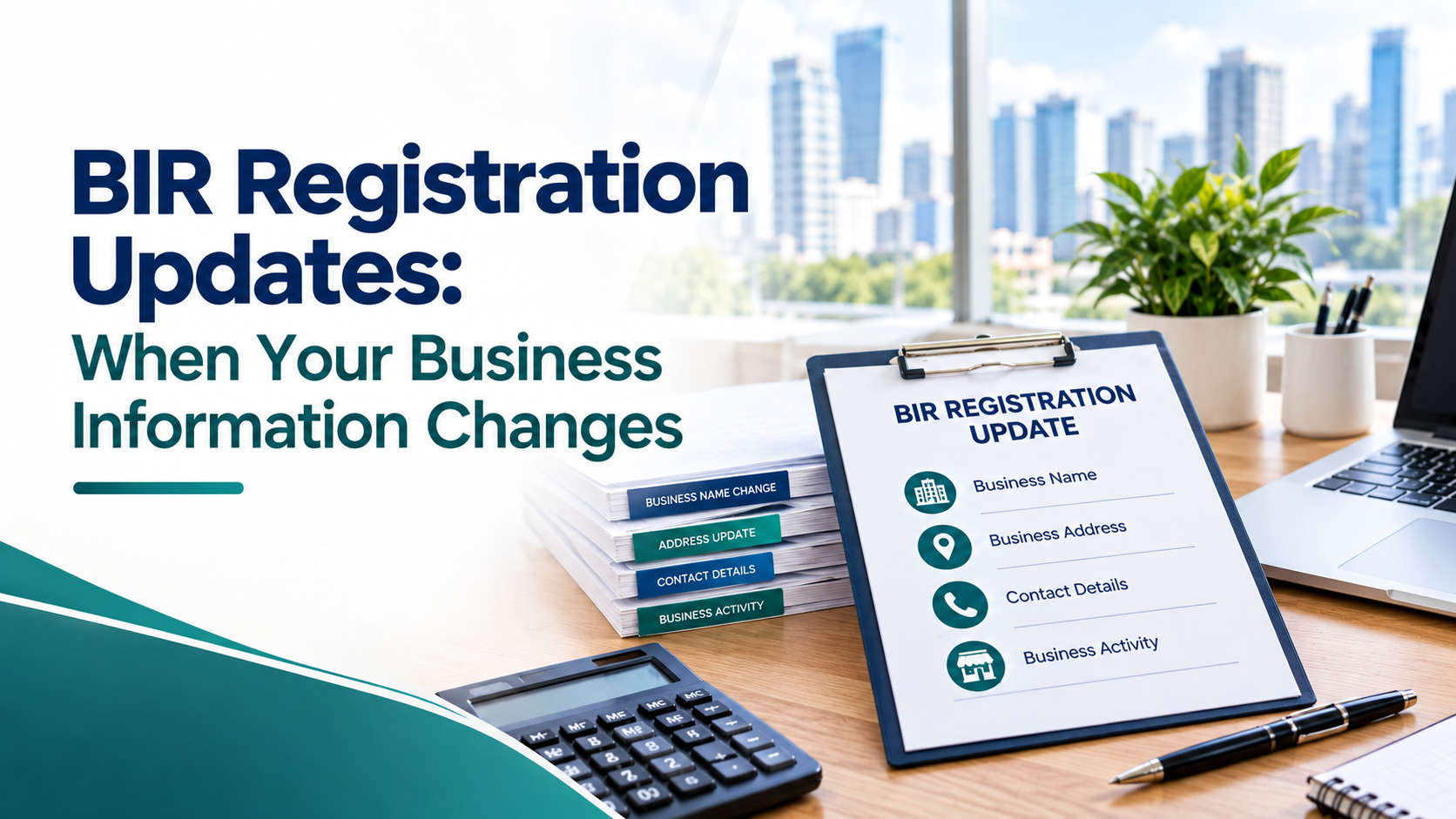
A business rarely stays exactly the same from the day it begins. You may move to a new office, add a line of business, change contact details, or update the people responsible for operations.
But when business information changes, one important question should follow: Have your registration records been updated where required?
Keeping registration details accurate is not simply an administrative task. It helps your business maintain consistent records and avoid confusion when dealing with tax authorities, customers, suppliers, and other government agencies.
Why Accurate Registration Information Matters
Your registered details help identify your business and the activities it is authorized or registered to conduct. If the information on file no longer reflects your actual operations, it may create questions during transactions or compliance reviews.
For example, a business that has moved may continue receiving notices or correspondence at its former location. A company that has expanded its activities may need to assess whether its registration details and permits appropriately reflect the change.
The correct action depends on the type of taxpayer, the nature of the change, and applicable rules.
Changes Worth Reviewing
Business owners should establish a process for identifying changes that may affect their registration. These can include:
- Business address or registered office changes
- Changes in registered business activities or trade name
- Changes in contact information
- Changes in responsible officers or other registered particulars, where applicable
- Changes in business structure or circumstances that may require new or amended registrations
Not every change follows the same procedure. Requirements may differ between the BIR and other agencies, such as the SEC, DTI, or local government unit.
Do Not Assume One Update Covers Everything
A frequent source of confusion is assuming that updating one government record automatically updates every other record.
Businesses should identify which agencies and permits are affected, determine the applicable process, and retain evidence of completed updates. The steps may vary based on the entity and the specific change.
A Practical Internal Checklist
When a business change occurs, consider assigning someone to:
- Describe the change and its effective date.
- Identify the registrations, permits, and records that may be affected.
- Verify the current requirements with the appropriate agency.
- Prepare and submit the required forms and supporting documents.
- Keep copies of submissions, acknowledgments, and updated records.
- Inform relevant internal teams so invoices, accounting records, and business documents remain consistent.
A written checklist can help prevent important updates from being overlooked—especially when several people handle operations, accounting, and compliance.
Keep Your Business Records Current
Registration updates are easier to manage when they are treated as part of ordinary business administration rather than an urgent task discovered at the last minute.
Review your registered information periodically and whenever a significant business change occurs. If you are unsure whether a change affects your BIR registration or another permit, seek guidance before assuming that no action is needed.
CBOS Business Solutions Inc. assists businesses with registration and compliance matters. Contact our team to discuss the registration updates relevant to your business.
Disclaimer: Registration and update requirements depend on the taxpayer’s circumstances, the nature of the change, and current agency rules. Verify the applicable procedure and documentary requirements with the relevant government agency before filing
Leave a Reply