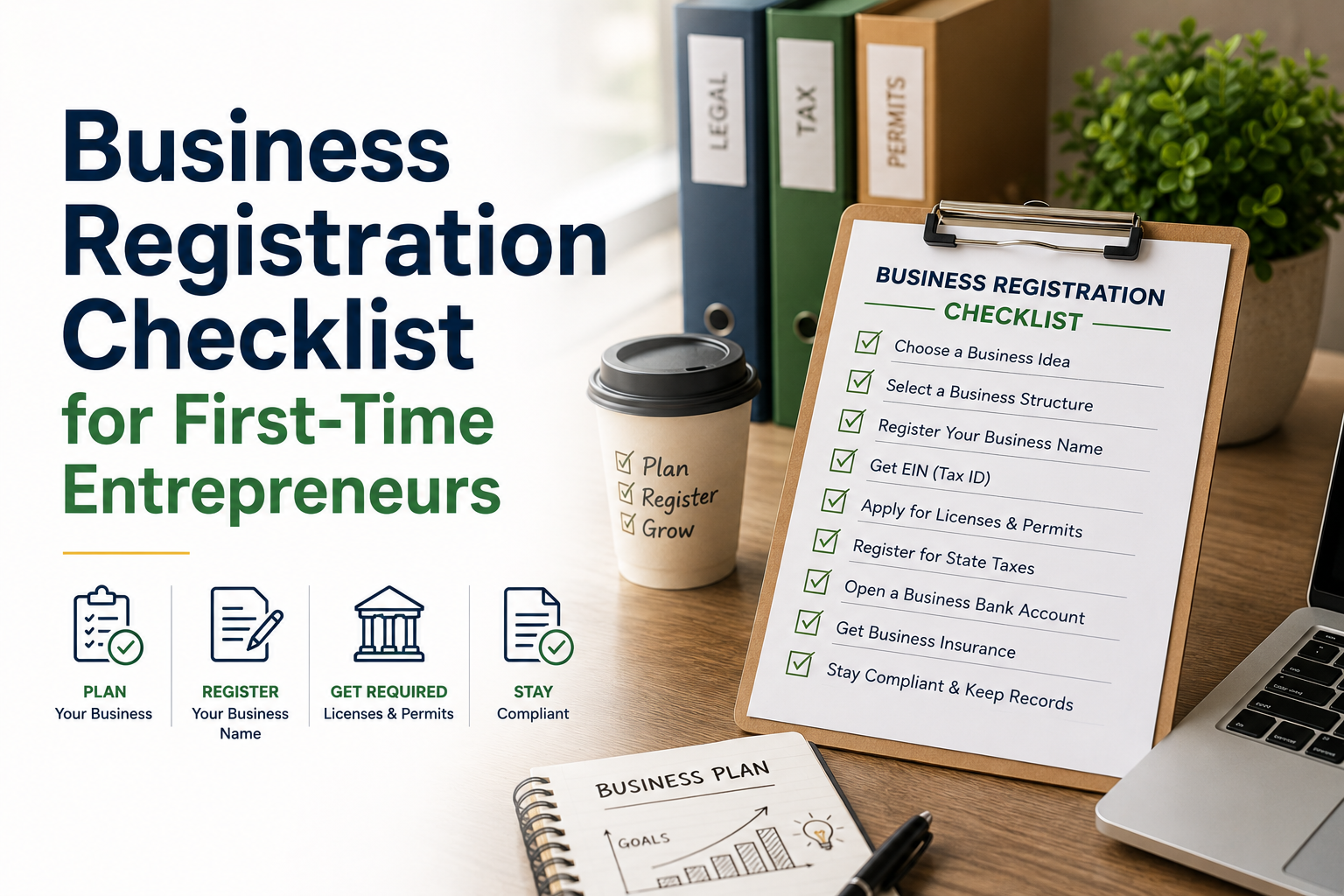
Starting your first business is an exciting milestone. Whether you’re launching a small online store, opening a café, offering professional services, or building a startup, one thing remains constant: your business must be properly registered before it can legally operate.
Many first-time entrepreneurs underestimate the importance of business registration. Some assume they can complete it later, while others are overwhelmed by the numerous government requirements. Unfortunately, overlooking even one registration requirement can lead to penalties, delayed operations, tax issues, and missed business opportunities.
As CPAs and business compliance professionals often advise, proper registration is not just about satisfying government requirements—it is about laying a strong legal and financial foundation for your business.
This comprehensive checklist will guide first-time entrepreneurs through the essential registrations and permits needed to legally start a business in the Philippines.
Why Business Registration Matters
Business registration establishes your enterprise as a legitimate and recognized entity. It enables you to:
- Operate legally
- Issue official receipts and invoices
- Open business bank accounts
- Build credibility with customers and suppliers
- Apply for loans and financing
- Participate in government and corporate contracts
- Comply with tax regulations
- Protect your business name
Simply put, registration transforms your business idea into a legally recognized enterprise.
Step 1: Determine Your Business Structure
Before registering, decide which legal structure best suits your business goals.
Sole Proprietorship
Ideal for:
- Freelancers
- Online sellers
- Small retail businesses
- Individual service providers
Advantages:
- Simple registration process
- Lower startup costs
- Full control by the owner
Registration Agency:
- Department of Trade and Industry (DTI)
Partnership
Suitable when two or more individuals will own and operate the business together.
Advantages:
- Shared resources
- Combined expertise
- Shared financial responsibilities
Registration Agency:
- Securities and Exchange Commission (SEC)
Corporation
Best for businesses seeking growth, investors, or greater legal protection.
Advantages:
- Separate legal personality
- Limited liability protection
- Easier ownership transfer
- Enhanced credibility
Registration Agency:
- Securities and Exchange Commission (SEC)
Step 2: Register Your Business Name
For Sole Proprietors
Register your business name with the DTI.
Checklist:
✔ Proposed business name
✔ Valid government-issued ID
✔ Business address
✔ Contact information
After approval, you’ll receive a DTI Certificate of Registration.
For Partnerships and Corporations
Register with the SEC.
Checklist:
✔ Company name reservation
✔ Articles of Partnership or Incorporation
✔ Corporate documents
✔ Details of owners, partners, or directors
✔ Capital structure information
After approval, the SEC issues the Certificate of Registration or Certificate of Incorporation.
Step 3: Secure a Barangay Clearance
Before obtaining a business permit, you must secure clearance from the barangay where your business is located.
Checklist:
✔ DTI or SEC registration
✔ Lease contract or proof of ownership
✔ Valid identification
✔ Completed application form
✔ Business location details
The Barangay Clearance confirms that your business complies with local community regulations.
Step 4: Obtain a Mayor’s Permit (Business Permit)
The Mayor’s Permit authorizes your business to operate within the city or municipality.
This is one of the most critical requirements for legal operations.
Checklist:
✔ Barangay Clearance
✔ DTI or SEC registration
✔ Lease agreement or property title
✔ Occupancy permit (if applicable)
✔ Community Tax Certificate (Cedula)
✔ Location sketch
✔ Government-issued IDs
Depending on the business type, additional inspections may be required.
Step 5: Register with the Bureau of Internal Revenue (BIR)
Every business must register with the BIR before commencing operations.
Failure to register properly may result in penalties and compliance issues.
BIR Registration Checklist
✔ DTI or SEC registration
✔ Mayor’s Permit
✔ Valid IDs
✔ Business address
✔ Books of Accounts
✔ Invoice or Receipt Registration
✔ Taxpayer Identification Number (TIN)
After registration, the BIR will issue:
- Certificate of Registration (COR)
- Registered books of accounts
- Authority for invoicing requirements
The COR must be displayed prominently at your business location.
Step 6: Register Your Books of Accounts
Every registered business must maintain accounting records.
Common books include:
✔ General Journal
✔ General Ledger
✔ Cash Receipts Book
✔ Cash Disbursements Book
Accurate bookkeeping helps ensure compliance with tax laws and supports informed business decisions.
Step 7: Register Official Receipts and Invoices
Businesses are generally required to issue compliant invoices or receipts for transactions.
Checklist:
✔ BIR registration completed
✔ Invoice details approved
✔ Accounting system ready
Issuing unregistered receipts or invoices can lead to significant penalties.
Step 8: Register as an Employer (If Hiring Employees)
If you plan to hire staff, employer registration is mandatory.
Social Security System (SSS)
Checklist:
✔ Employer registration
✔ Employee enrollment
✔ Contribution reporting system
PhilHealth
Checklist:
✔ Employer registration
✔ Employee enrollment
✔ Contribution remittance procedures
Pag-IBIG Fund
Checklist:
✔ Employer registration
✔ Employee registration
✔ Contribution remittance process
Failure to comply with labor and social welfare laws can expose businesses to penalties and legal liabilities.
Step 9: Secure Industry-Specific Permits
Certain industries require additional licenses before operations begin.
Food Businesses
✔ Sanitary Permit
✔ Health Certificates
✔ Food safety compliance
Construction Businesses
✔ PCAB License
✔ Engineering permits
Travel Agencies
✔ Department of Tourism (DOT) Accreditation
Importers and Exporters
✔ Bureau of Customs Registration
✔ Trade-related permits
Financial and Lending Businesses
✔ SEC authorization
✔ Additional regulatory approvals
Always verify industry-specific requirements before launching operations.
Step 10: Prepare Essential Business Documents
Beyond government registrations, entrepreneurs should organize important operational documents.
Checklist:
✔ Lease Agreement
✔ Supplier Contracts
✔ Employment Contracts
✔ Company Policies
✔ Accounting Records
✔ Tax Documents
✔ Business Insurance Policies
Strong documentation protects the business and reduces future legal risks.
Special Considerations for Online Businesses
Many first-time entrepreneurs mistakenly believe online businesses do not require registration.
In reality, most online businesses have legal and tax obligations similar to traditional businesses.
Examples include:
- E-commerce stores
- Freelancers
- Digital marketing agencies
- Online consultants
- Content creators
- Dropshipping businesses
Depending on the business model, online entrepreneurs may still need:
✔ DTI or SEC Registration
✔ BIR Registration
✔ Mayor’s Permit
✔ Government agency registrations (if hiring employees)
Proper compliance helps avoid future tax assessments and regulatory issues.
Common Registration Mistakes First-Time Entrepreneurs Make
Avoid these costly errors:
Starting Operations Too Early
Operating before completing registration may result in penalties and legal complications.
Choosing the Wrong Business Structure
Selecting an inappropriate structure can create tax and liability concerns later.
Delaying BIR Registration
Late registration often results in unnecessary penalties.
Ignoring Local Government Requirements
Every city and municipality may have unique requirements.
Poor Recordkeeping
Inadequate bookkeeping can lead to tax compliance problems and inaccurate financial reporting.
Complete Business Registration Checklist
Business Formation
✔ Choose business structure
✔ Register business name (DTI or SEC)
Local Government Compliance
✔ Obtain Barangay Clearance
✔ Secure Mayor’s Permit
Tax Compliance
✔ Register with BIR
✔ Register books of accounts
✔ Register invoices or receipts
Employment Compliance
✔ Register with SSS
✔ Register with PhilHealth
✔ Register with Pag-IBIG
Industry Compliance
✔ Obtain specialized permits and licenses
Operational Readiness
✔ Prepare contracts and agreements
✔ Establish bookkeeping systems
✔ Organize tax records
✔ Secure business insurance
Build Your Business on a Strong Legal Foundation
For first-time entrepreneurs, business registration may seem complicated, but it is one of the most important investments you can make in your company’s future. Completing registrations correctly from the beginning helps prevent costly penalties, strengthens your credibility, and positions your business for long-term growth.
At CBOS, we help entrepreneurs navigate business registration, bookkeeping, tax compliance, payroll, and corporate requirements with confidence. Whether you’re starting a sole proprietorship, partnership, or corporation, our experts can guide you through every step of the process.
Ready to launch your business the right way? Contact CBOS today and let our professionals handle the compliance while you focus on growing your business.
Navigating the business landscape in the Philippines can be both rewarding and intricate. Whether you’re embarking on a new venture or scaling up, ensuring that your corporate endeavors are in line with local regulations is paramount.
At CBOS Business Solutions Inc., we pride ourselves on simplifying these processes for our clients. As a seasoned professional services company, we offer comprehensive assistance with SEC Registration, Visa processing, and a myriad of other essential business requirements. Our team of experts is dedicated to ensuring that your business is compliant, well-established, and ready to thrive in the Philippine market.
Why venture into the complexities of business registration and compliance alone? Allow our team to guide you every step of the way. After all, your success is our commitment.
Get in touch today and let us be your partner in achieving your business goals in the Philippines.
Email Address: gerald.bernardo@cbos.com.ph
Mobile No.: +639270032851
You can also click this link to schedule a meeting.
Leave a Reply