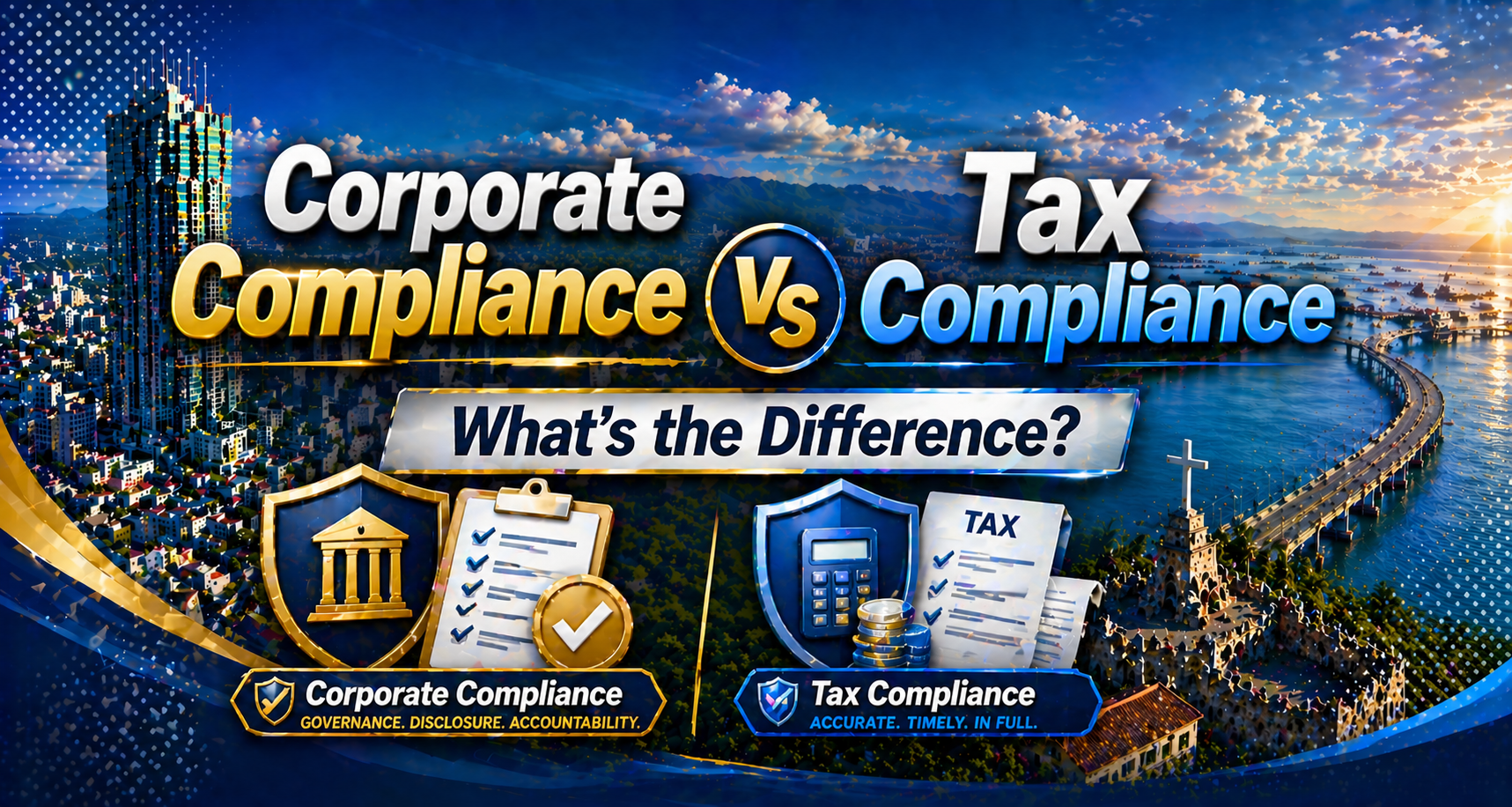
Many business owners use the word compliance as if it refers to one single obligation. In reality, compliance usually has multiple parts. Two of the most important are corporate compliance and tax compliance.
Understanding the difference is critical because many companies stay updated in one area while neglecting the other. A business may be properly registered as a corporation but behind on taxes—or fully filing taxes while failing corporate reportorial duties.
Both can create serious legal and financial consequences.
This guide explains what each type of compliance means in the Philippines, why both matter, and how businesses should manage them.
What Is Corporate Compliance?
Corporate compliance generally refers to meeting the legal obligations required to maintain a company’s good standing as a registered entity.
For many corporations in the Philippines, this is associated with the Securities and Exchange Commission.
It focuses on whether the company is properly governed and legally maintained as a corporation.
Common Corporate Compliance Areas:
- Keeping corporate registration active
- Updating directors and officers
- Maintaining shareholder records
- Filing required annual or reportorial documents
- Recording major corporate actions
- Amending records after changes in name, address, capital, or structure
- Following Articles of Incorporation and By-laws
In simple terms:
Corporate compliance asks: Is the company legally organized and properly maintained?
What Is Tax Compliance?
Tax compliance refers to meeting obligations related to taxation, usually involving the Bureau of Internal Revenue.
It focuses on whether the business properly reports income, files returns, pays taxes, and keeps financial records.
Common Tax Compliance Areas:
- Correct tax registration
- Timely filing of tax returns
- Payment of taxes due
- VAT / percentage tax compliance where applicable
- Withholding tax obligations
- Books of accounts and record retention
- Proper invoicing and receipts
In simple terms:
Tax compliance asks: Is the company properly reporting and paying taxes?
Key Differences at a Glance
1. Main Regulator
Corporate Compliance:
Usually tied to the Securities and Exchange Commission for corporations.
Tax Compliance:
Usually tied to the Bureau of Internal Revenue.
2. Core Focus
Corporate Compliance:
Ownership, governance, legal status, corporate records.
Tax Compliance:
Income, expenses, filings, payments, invoicing, bookkeeping.
3. Common Documents
Corporate Compliance:
- Corporate filings
- Board resolutions
- Shareholder records
- Updated officer information
Tax Compliance:
- Tax returns
- Receipts / invoices
- Books of accounts
- Payment confirmations
4. Risks of Non-Compliance
Corporate Non-Compliance May Lead To:
- Penalties
- Problems with corporate good standing
- Difficulty with investors, banks, or contracts
- Issues during ownership changes
Tax Non-Compliance May Lead To:
- Surcharges
- Interest
- Tax assessments
- Audits
- Collection actions
Why Businesses Confuse the Two
Many owners think:
- “We registered already, so we’re compliant.”
- “We pay taxes, so everything is fine.”
But registration alone does not cover taxes, and tax filing alone does not maintain corporate legal standing.
Both must be managed separately.
Real-World Example
A company may:
- Have active tax filings
- Pay taxes regularly
But if it ignores corporate filings or governance updates, it can still face corporate compliance problems.
Likewise, a corporation may maintain records perfectly but face tax penalties if returns are late.
Why Both Matter for Growth
Banks, investors, buyers, and partners often review both areas.
They want to see:
- Clean corporate records
- Reliable tax history
- Transparent ownership
- Organized governance
- Low regulatory risk
Weakness in either area can delay deals.
Best Practices for Business Owners
To stay strong in both areas:
- Keep a compliance calendar
- Separate legal/corporate records from tax files
- Update ownership and officer changes promptly
- File taxes on time
- Maintain accurate bookkeeping
- Conduct annual compliance reviews
- Seek professional guidance when needed
Final Thoughts
Corporate compliance and tax compliance are different—but equally important.
One protects your company’s legal existence and governance.
The other protects your company’s financial and tax standing.
For businesses in the Philippines, the practical lesson is simple:
A truly compliant company manages both—not just one.
Because growth becomes easier when your business is legally organized, financially clean, and regulator-ready.
Navigating the business landscape in the Philippines can be both rewarding and intricate. Whether you’re embarking on a new venture or scaling up, ensuring that your corporate endeavors are in line with local regulations is paramount.
At CBOS Business Solutions Inc., we pride ourselves on simplifying these processes for our clients. As a seasoned professional services company, we offer comprehensive assistance with SEC Registration, Visa processing, and a myriad of other essential business requirements. Our team of experts is dedicated to ensuring that your business is compliant, well-established, and ready to thrive in the Philippine market.
Why venture into the complexities of business registration and compliance alone? Allow our team to guide you every step of the way. After all, your success is our commitment.
Get in touch today and let us be your partner in achieving your business goals in the Philippines.
Email Address: gerald.bernardo@cbos.com.ph
Mobile No.: +639270032851
You can also click this link to schedule a meeting.
Leave a Reply