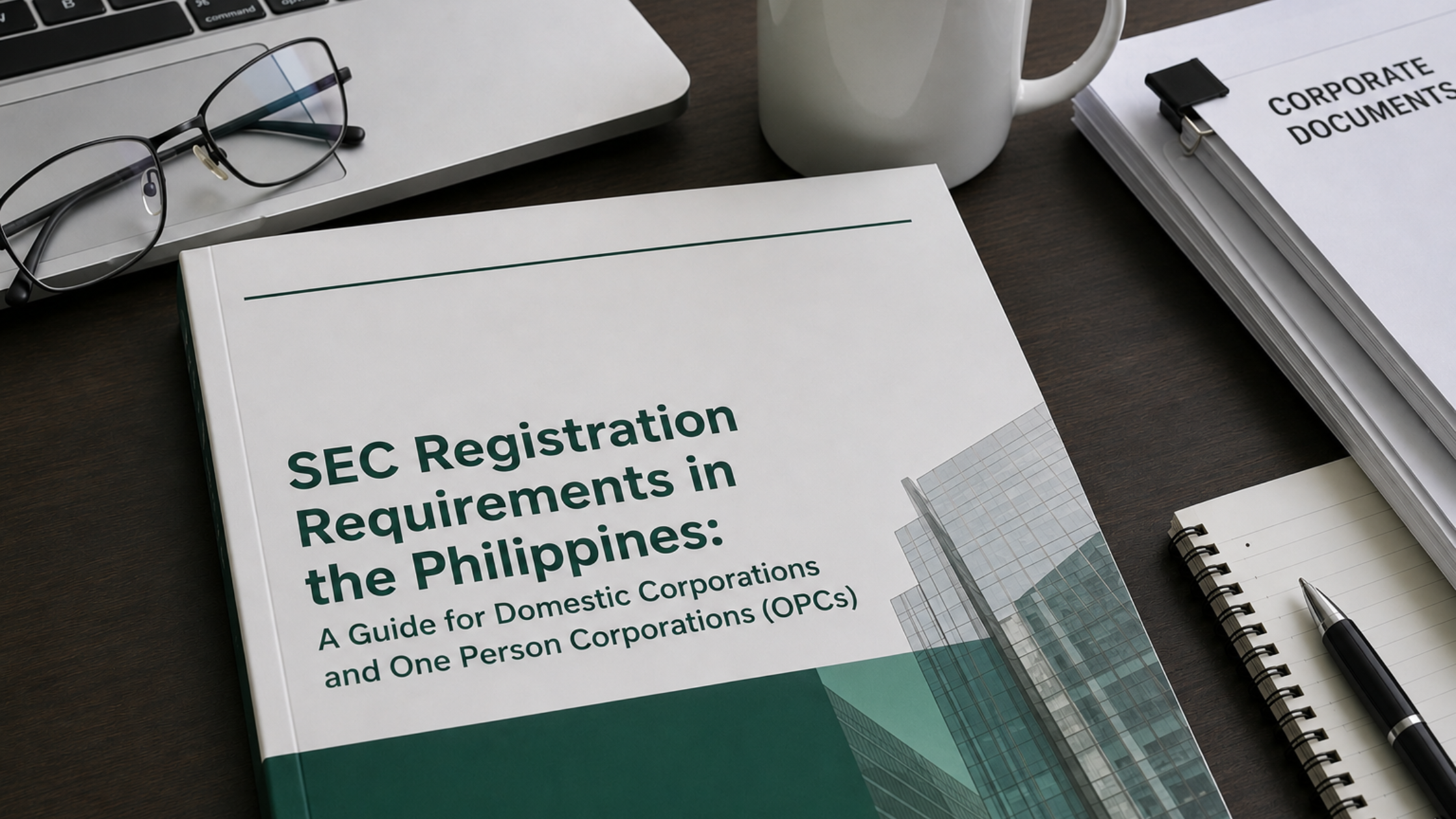
Starting a business in the Philippines involves more than choosing a company name and opening your doors. If you plan to operate as a corporation, one of your first major compliance steps is registering with the Securities and Exchange Commission (SEC).
For entrepreneurs establishing either a Domestic Corporation or a One Person Corporation (OPC), the SEC’s online registration systems have made the process more accessible. However, understanding the requirements before starting your application can help prevent delays, rejected submissions, and unnecessary back-and-forth.
What Is SEC Registration?
The Securities and Exchange Commission regulates corporations, partnerships, and other registered entities in the Philippines.
SEC registration gives a corporation its legal personality and establishes it as an entity separate from its owners or stockholders.
For many entrepreneurs, the two relevant structures are:
Domestic Corporation — A corporation generally organized by multiple incorporators or stockholders in accordance with Philippine corporate law.
One Person Corporation (OPC) — A corporate structure that allows a single qualified stockholder to establish a corporation without bringing in additional incorporators simply to meet ownership requirements.
The appropriate structure depends on your ownership arrangement, business plans, capitalization, governance requirements, and long-term objectives.
Registering Through the SEC Online System
The SEC provides online facilities for company registration, including the eSPARC system and related SEC registration services.
Before beginning an application, prepare the company’s proposed information carefully. This normally includes:
- Proposed corporate name
- Primary and secondary business purposes
- Principal office address
- Capital structure
- Stockholder or incorporator information
- Corporate officers
- Beneficial ownership information
- Contact details and email addresses
Depending on the business and registration route, additional documents or endorsements may be required.
Choosing and Reserving Your Corporate Name
Your proposed company name must comply with SEC naming rules.
A name may be rejected if it is already registered, confusingly similar to another registered name, misleading, prohibited, or contains restricted terminology without the necessary authorization.
Businesses should therefore prepare alternative names before beginning the registration process.
Your corporate name is also an important branding decision. Ideally, it should be distinctive enough for regulatory approval while remaining easy for customers to recognize.
Domestic Corporation Requirements
Requirements depend on the nature and ownership of the corporation, but registration commonly involves corporate information and documents covering areas such as:
- Articles of Incorporation
- Corporate bylaws, when applicable
- Incorporator and stockholder details
- Capitalization and share subscriptions
- Treasurer and corporate officer information
- Beneficial ownership declarations
- Principal office information
Certain industries may have separate capitalization, foreign ownership, licensing, or endorsement requirements.
Businesses with foreign stockholders should pay particular attention to Philippine foreign-investment restrictions and industry-specific ownership limitations before finalizing their corporate structure.
One Person Corporation Requirements
An OPC can be particularly attractive to solo entrepreneurs who want the liability and continuity advantages of a corporation while maintaining a single-stockholder structure.
An OPC generally requires information concerning the:
- Single stockholder
- Corporate officers
- Nominee
- Alternate nominee
- Principal office
- Corporate purpose
- Capital structure
The nominee and alternate nominee are important parts of OPC planning because they address what happens to the corporation under circumstances affecting the single stockholder.
Not every person or type of business is eligible to use an OPC, so eligibility should be checked before proceeding.
What Happens After SEC Approval?
SEC registration is only one stage of establishing a compliant business.
After incorporation, the business will generally need to address additional registrations and permits, including applicable:
Local government registrations — such as Barangay Clearance and Business/Mayor’s Permit requirements.
BIR registration — for tax registration, invoicing requirements, books of accounts, and other tax compliance obligations.
Employer registrations — such as SSS, PhilHealth, and Pag-IBIG requirements when applicable.
Industry-specific permits — depending on the company’s activities.
This is why entrepreneurs should think of business registration as a sequence rather than a single SEC application.
Common SEC Registration Mistakes
Many registration delays can be avoided with better preparation.
Common issues include selecting a corporate name that cannot be approved, entering inconsistent information across documents, incorrectly describing the primary business purpose, choosing an unsuitable capital structure, and failing to identify additional regulatory approvals that apply to the proposed activity.
Another mistake is assuming that receiving the SEC Certificate of Incorporation means the business has completed every government registration requirement.
It hasn’t.
SEC incorporation establishes the corporation, but tax and local-government compliance still need to be addressed.
Start Your Corporation on the Right Foundation
Choosing between a Domestic Corporation and an OPC is an important business decision.
The right structure should support not only your current ownership arrangement but also your future plans for investors, financing, expansion, governance, taxation, and succession.
Preparing your information and documents before beginning the SEC registration process can significantly reduce administrative delays.
Once your SEC registration is completed, the next step is ensuring that your local permits, BIR registration, accounting records, and ongoing corporate compliance are properly established.
Compliance note: SEC procedures, documentary requirements, fees, online systems, and eligibility rules may be amended. Always verify the current requirements directly with the Philippine SEC or consult a qualified professional before filing.
Leave a Reply