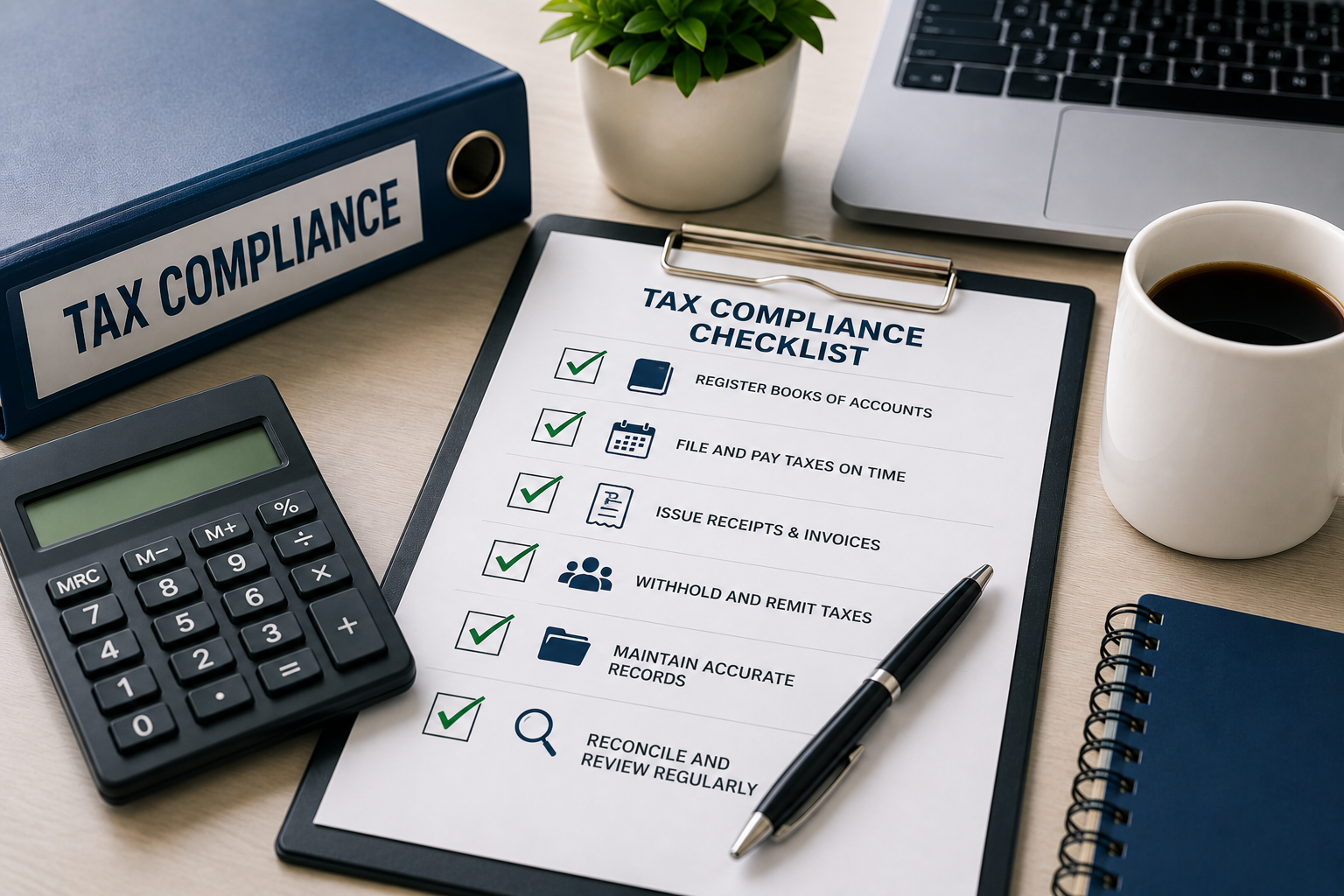
A successful business is not only measured by its profitability but also by its ability to comply with legal and tax obligations. Every year, Philippine businesses are required to submit various reports to the Bureau of Internal Revenue (BIR), the Securities and Exchange Commission (SEC), local government units (LGUs), and other regulatory agencies. Missing even one deadline can result in penalties, interest, compromise fines, or unnecessary tax audits.
Unfortunately, many businesses focus only on filing their Annual Income Tax Return and overlook other important compliance requirements, such as annual withholding tax reports, financial statements, inventory submissions, books of accounts registration, and SEC reportorial filings.
This comprehensive month-by-month checklist provides an overview of the key annual tax and regulatory compliance obligations that businesses in the Philippines should monitor throughout the year.
Note: Filing deadlines and reporting requirements may vary depending on the taxpayer’s classification, accounting period, business structure, and applicable BIR or SEC issuances. Always verify the latest regulations before filing.
Why an Annual Tax Compliance Checklist Matters
Maintaining a compliance calendar helps businesses:
- Avoid late filing penalties
- Maintain good standing with government agencies
- Prepare for BIR audits
- Improve financial reporting
- Ensure accurate tax payments
- Reduce compliance-related stress
Instead of rushing to meet year-end deadlines, businesses can spread compliance activities throughout the year.
January: Start the Year Strong
January is one of the busiest months for payroll and withholding tax compliance.
Key Tasks
- File BIR Form 1604-C (Annual Information Return of Income Taxes Withheld on Compensation)
- File BIR Form 1604-E (Annual Information Return of Creditable Income Taxes Withheld)
- File BIR Form 1604-F (Annual Information Return of Final Income Taxes Withheld)
- Prepare and issue BIR Form 2316 to qualified employees
- Prepare the Annual Alphalist of Employees
- Reconcile payroll records with annual withholding tax reports
- Review year-end accounting records
Starting the year with complete payroll reconciliations helps minimize reporting errors.
February: Verify Employee and Payroll Compliance
February is an ideal time to confirm that payroll records have been properly finalized.
Key Tasks
- Distribute BIR Form 2316 to employees within the period prescribed by the BIR
- Correct payroll discrepancies identified after year-end
- Update employee master records
- Archive prior-year payroll documentation
- Review withholding tax compliance procedures
Proper payroll documentation supports future audits and employee requests.
March: Prepare Financial Statements
Businesses should begin preparing year-end accounting reports well before tax filing deadlines.
Key Tasks
- Close books of accounts
- Prepare trial balances
- Reconcile bank accounts
- Verify receivables and payables
- Review inventory balances
- Prepare supporting schedules
- Coordinate with external auditors, where required
Early preparation reduces pressure during income tax season.
April: Annual Income Tax Compliance
April is one of the most significant compliance months for many taxpayers.
Key Tasks
- File the applicable Annual Income Tax Return (such as BIR Forms 1701, 1701A, or 1702, depending on the taxpayer’s classification)
- Submit Audited Financial Statements, when required
- Reconcile quarterly and annual tax returns
- Review Creditable Withholding Tax (BIR Form 2307) claims
- Verify Net Operating Loss Carry-Over (NOLCO), Minimum Corporate Income Tax (MCIT), and other available tax assets
Ensure that the Annual Income Tax Return is consistent with the Financial Statements and books of account.
May: SEC and Corporate Compliance
For corporations, May often marks the beginning of SEC reportorial activities, depending on the corporation’s fiscal year-end and annual meeting schedule.
Key Tasks
- Prepare the General Information Sheet (GIS)
- Review corporate records
- Update director and officer information
- Verify shareholding records
- Monitor SEC filing schedules
Corporations should also review any annual SEC memoranda regarding filing procedures.
June: Mid-Year Tax Review
A mid-year compliance review helps identify issues before they become larger problems.
Key Tasks
- Review bookkeeping procedures
- Reconcile VAT accounts
- Review withholding tax compliance
- Examine accounting controls
- Update fixed asset schedules
- Assess inventory management procedures
Mid-year reviews improve year-end efficiency.
July: Inventory and Asset Management
Businesses should ensure that inventory records remain accurate throughout the year.
Key Tasks
- Conduct periodic inventory counts
- Review obsolete inventory
- Verify inventory valuation
- Update warehouse records
- Review fixed asset additions and disposals
Accurate inventory records support both financial reporting and tax compliance.
August: Internal Tax Health Check
August is an excellent time to perform an internal tax compliance assessment.
Key Tasks
- Review tax registrations
- Verify Books of Accounts
- Check ORUS registration records
- Confirm proper bookkeeping method
- Review document retention policies
Correcting issues early helps avoid year-end surprises.
September: Prepare for Year-End
Businesses should begin planning for the final quarter.
Key Tasks
- Review estimated taxable income
- Evaluate available tax credits
- Update deferred tax schedules
- Reconcile accounting balances
- Review payroll projections
Tax planning before year-end often produces better compliance outcomes than last-minute adjustments.
October: Corporate Governance Review
Corporations should review corporate records before year-end reporting.
Key Tasks
- Review Board resolutions
- Update corporate records
- Confirm registered office information
- Verify business registrations
- Review shareholder records
Strong corporate governance supports accurate regulatory reporting.
November: Final Accounting Review
November provides an opportunity to identify outstanding accounting issues before year-end.
Key Tasks
- Review receivables
- Review payables
- Analyze bad debts
- Evaluate inventory adjustments
- Review depreciation schedules
- Prepare tax working papers
Early review minimizes year-end corrections.
December: Year-End Closing
December is the time to finalize records for the taxable year.
Key Tasks
- Perform physical inventory count
- Complete year-end bank reconciliations
- Finalize payroll records
- Review all tax accounts
- Update accounting records
- Archive supporting documents
- Begin preparing schedules for January filings
Closing the books accurately simplifies the next year’s compliance cycle.
Compliance Requirements Throughout the Year
In addition to annual submissions, businesses should continuously monitor recurring obligations, including:
- Monthly and quarterly tax returns
- VAT compliance
- Percentage tax filings, where applicable
- Withholding tax remittances
- Payroll tax compliance
- Bookkeeping updates
- Record retention
- ORUS registration updates, when applicable
Annual compliance depends on maintaining accurate records throughout the year—not only during filing season.
Common Compliance Mistakes
Many businesses incur unnecessary penalties because of avoidable errors.
Waiting Until the Deadline
Preparing reports only days before filing deadlines often results in mistakes.
Maintain a compliance calendar and begin preparations early.
Poor Recordkeeping
Incomplete accounting records make tax compliance significantly more difficult.
Maintain organized books and supporting documents throughout the year.
Failure to Reconcile Records
Financial Statements, tax returns, payroll records, VAT returns, and withholding tax reports should all reconcile.
Unexplained differences may trigger BIR inquiries.
Ignoring Regulatory Updates
The BIR and SEC regularly issue new regulations that affect filing procedures and deadlines.
Businesses should monitor official issuances throughout the year.
Missing Annual Reviews
Periodic internal reviews help identify issues before regulators do.
A proactive approach is far more effective than reacting to audit findings.
Best Practices for Annual Compliance
To strengthen your compliance program:
- Maintain an annual compliance calendar.
- Update your Books of Accounts regularly.
- Reconcile accounting and tax records monthly.
- Keep complete supporting documents.
- Conduct periodic internal reviews.
- Coordinate with your HR, Accounting, and Finance teams.
- Monitor BIR and SEC issuances.
- Consult a CPA or tax lawyer for complex transactions.
Consistent compliance practices reduce audit risks and improve business efficiency.
Final Thoughts
Tax compliance is not a once-a-year responsibility—it is an ongoing process that requires planning, organization, and attention to detail. By following a structured month-by-month compliance checklist, Philippine businesses can stay ahead of filing deadlines, maintain accurate records, and minimize the risk of penalties or BIR audit issues.
Whether you are a sole proprietor, partnership, corporation, or growing enterprise, adopting a proactive approach to compliance allows you to focus more on growing your business and less on resolving preventable tax problems. A well-maintained compliance calendar, supported by accurate bookkeeping and professional advice, is one of the best investments any business can make.
Disclaimer
This article is intended for general informational purposes only and should not be construed as legal, accounting, or tax advice. Tax filing requirements, reportorial obligations, and deadlines vary depending on the taxpayer’s legal structure, industry, accounting period, registration status, and applicable laws, BIR regulations, SEC issuances, and local government requirements. Filing schedules and procedures may also change through subsequent legislation or administrative issuances. Businesses should consult a qualified Certified Public Accountant (CPA) or tax lawyer and review the latest official issuances to determine the compliance requirements applicable to their specific circumstances.
Leave a Reply