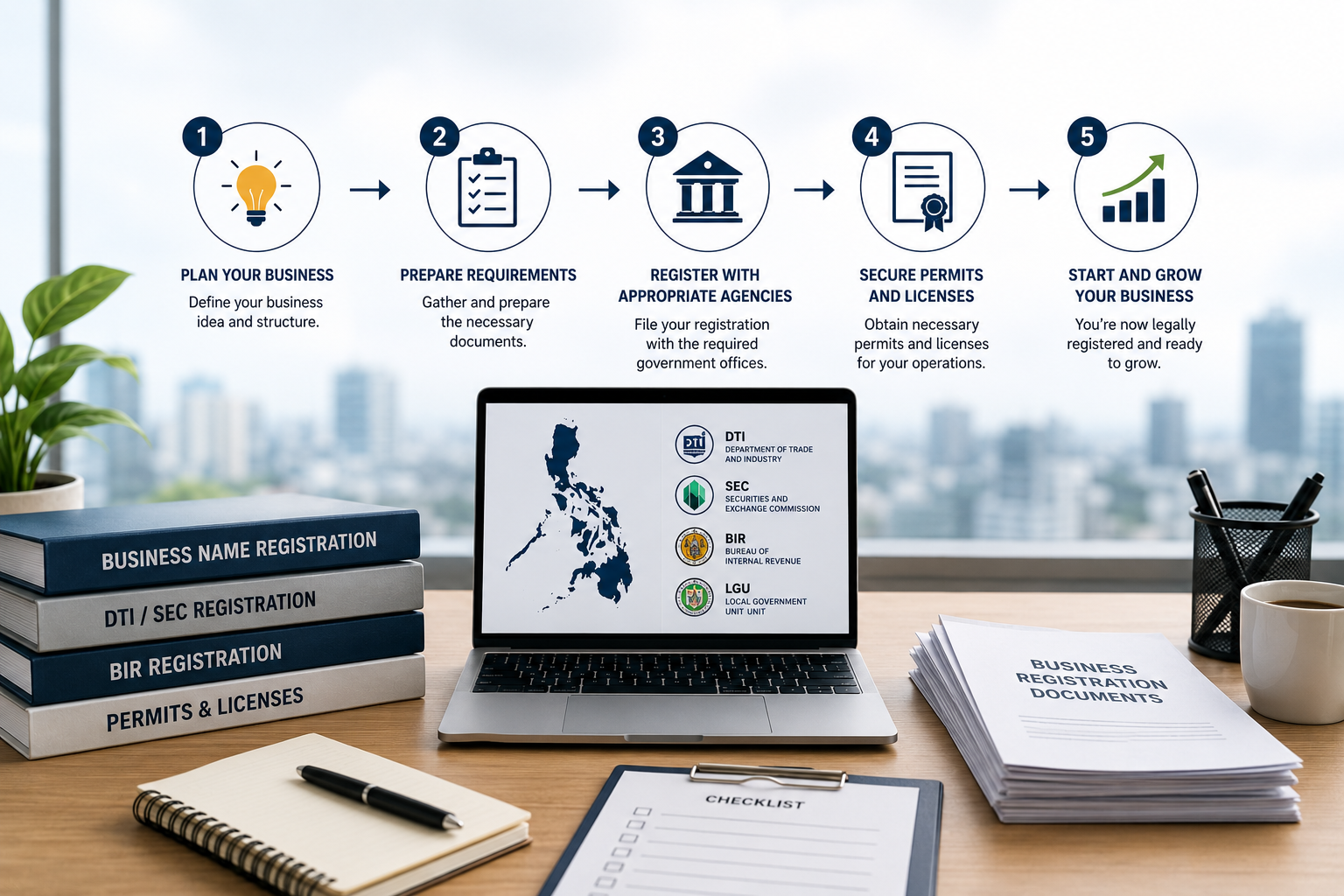
Starting a business in the Philippines is an exciting milestone, but before you can legally operate, one essential step must be completed—business registration. Whether you’re opening a retail store, launching an online business, offering professional services, or establishing a corporation, proper registration is the foundation of a legally compliant and sustainable enterprise.
Many aspiring entrepreneurs find the registration process overwhelming because it involves multiple government agencies, documentary requirements, and regulatory obligations. As a result, some delay registration or unknowingly skip important steps, which can lead to penalties, operational delays, and missed business opportunities.
From a CPA and legal compliance perspective, understanding the Philippine business registration process is crucial. It not only ensures compliance with the law but also positions your business for growth, credibility, and long-term success.
This guide explains each stage of the Philippine business registration process, the government agencies involved, and the practical considerations every entrepreneur should know before starting a business.
Why Business Registration Is Important
Business registration is more than obtaining permits or complying with government regulations. It establishes your business as a legitimate entity recognized by law.
A registered business can:
- Operate legally
- Build customer confidence
- Issue official invoices
- Open business bank accounts
- Access financing opportunities
- Participate in government and corporate contracts
- Expand operations with greater ease
Proper registration also reduces legal and tax compliance risks that may arise from operating informally.
Who Needs to Register a Business?
Generally, any individual or organization engaging in business activities for profit should determine the appropriate registration requirements.
Examples include:
- Sole proprietors
- Corporations
- Partnerships
- One Person Corporations (OPCs)
- Online sellers
- Freelancers transitioning into business owners
- Consultants
- Importers and exporters
- Professional service providers
The specific requirements depend on the business structure, location, and nature of operations.
Step 1: Choose the Right Business Structure
The first step is selecting the legal structure that best fits your business goals.
Sole Proprietorship
A sole proprietorship is owned and managed by one individual.
Advantages
- Simple registration process
- Lower administrative requirements
- Full control over business decisions
Considerations
The owner generally bears personal responsibility for business obligations.
Partnership
A partnership is formed by two or more persons who agree to contribute resources to a common business.
Advantages
- Shared capital
- Shared expertise
- Shared responsibilities
Considerations
Partners should have a well-drafted partnership agreement outlining their rights and obligations.
Corporation
A corporation has a legal personality separate from its shareholders.
Advantages
- Limited liability
- Easier transfer of ownership
- Suitable for larger businesses
Considerations
Corporations are subject to additional reportorial and governance requirements.
One Person Corporation (OPC)
An OPC allows a single individual to establish a corporation without additional incorporators.
Advantages
- Separate legal personality
- Limited liability
- Suitable for entrepreneurs seeking corporate protection
Step 2: Register Your Business Name
The next step is securing your business name.
For Sole Proprietorships
Register with the Department of Trade and Industry (DTI).
The DTI registration grants the owner the right to use the approved business name within the applicable scope.
For Corporations and Partnerships
Register with the Securities and Exchange Commission (SEC).
The SEC reviews and approves the proposed corporate or partnership name before registration.
Tips for Choosing a Business Name
- Select a unique and distinguishable name.
- Avoid names that may confuse consumers or infringe on existing rights.
- Choose a name that reflects your products or services.
- Consider future branding and expansion.
Step 3: Secure Barangay Clearance
After registering the business name, most businesses are required to obtain a Barangay Clearance from the barangay where the business will operate.
The barangay verifies that the business location complies with local regulations and zoning requirements.
Typical documents may include:
- Business registration certificate
- Valid identification
- Proof of business address
- Lease contract or proof of ownership, if applicable
Step 4: Obtain the Mayor’s Permit (Business Permit)
The local government unit (LGU) where the business operates issues the Mayor’s Permit.
This permit authorizes the business to conduct operations within the city or municipality.
Requirements vary depending on the nature of the business and the local government’s regulations.
Depending on the business, additional clearances or inspections may be required, such as:
- Fire Safety Inspection Certificate (FSIC)
- Sanitary Permit
- Health Certificates for certain establishments
- Building or Occupancy Permit, when applicable
- Environmental or zoning clearances for regulated industries
Business owners should verify the specific requirements with the appropriate LGU.
Step 5: Register with the Bureau of Internal Revenue (BIR)
BIR registration is one of the most important steps in the business registration process.
Registration enables the business to comply with Philippine tax laws.
During this process, businesses generally:
- Register as a taxpayer
- Secure a Certificate of Registration (COR)
- Register books of accounts, when required
- Comply with invoicing requirements
- Understand applicable tax obligations
Depending on the business, taxes may include:
- Income Tax
- Value-Added Tax (VAT) or Percentage Tax
- Withholding Taxes
- Documentary Stamp Tax, where applicable
Proper BIR registration helps prevent penalties and establishes the framework for ongoing tax compliance.
Step 6: Register as an Employer (If Hiring Employees)
Businesses that hire employees must complete employer registrations with the appropriate government agencies.
These generally include:
Social Security System (SSS)
Provides social security benefits to employees.
PhilHealth
Provides health insurance coverage.
Pag-IBIG Fund
Provides housing and savings benefits.
Employers are also responsible for:
- Payroll compliance
- Employee contribution remittances
- Mandatory reporting requirements
Failure to comply may result in administrative penalties and labor-related issues.
Step 7: Open a Business Bank Account
Although not always a legal requirement, opening a dedicated business bank account is a best practice.
Benefits include:
- Separation of personal and business funds
- Easier bookkeeping
- Improved cash flow monitoring
- Better financial reporting
- Enhanced professionalism when dealing with clients and suppliers
Maintaining separate financial records also supports tax compliance.
Step 8: Set Up Proper Bookkeeping and Accounting
Every business should establish an organized accounting system from the beginning.
Proper bookkeeping helps monitor:
- Revenue
- Expenses
- Cash flow
- Profitability
- Tax obligations
Accurate records also support informed business decisions and facilitate compliance during audits or tax examinations.
Many growing businesses choose to work with professional accountants or outsourced bookkeeping providers to maintain accurate financial records.
Step 9: Understand Your Ongoing Compliance Obligations
Business registration is only the beginning.
After registration, businesses must continue complying with applicable legal and tax requirements.
These may include:
- Filing tax returns
- Renewing business permits
- Maintaining books of accounts
- Issuing compliant invoices
- Submitting required reports to regulatory agencies
- Remitting employee contributions, if applicable
Maintaining ongoing compliance helps avoid penalties and supports uninterrupted business operations.
Common Mistakes During the Registration Process
Many entrepreneurs encounter avoidable issues during registration.
Common mistakes include:
Choosing the Wrong Business Structure
Selecting an inappropriate structure may affect taxes, liability, and future expansion.
Using an Unavailable Business Name
Failure to verify name availability can delay registration.
Delaying BIR Registration
Late registration may expose the business to compliance issues and penalties.
Ignoring Local Government Requirements
Businesses often focus on national registrations while overlooking local permits and clearances.
Poor Recordkeeping
Failure to organize documents and maintain financial records creates future compliance challenges.
Attempting the Process Without Professional Guidance
Complex businesses often benefit from professional advice to ensure compliance and avoid costly errors.
Practical Tips for a Smoother Registration Process
To help streamline your business registration:
✔ Determine the appropriate legal structure before applying.
✔ Prepare all required identification and supporting documents in advance.
✔ Confirm local government requirements for your business location.
✔ Keep copies of all registration certificates and permits.
✔ Establish a bookkeeping system immediately after registration.
✔ Consult qualified professionals when uncertain about legal or tax obligations.
Proper planning can save time and reduce unnecessary delays.
Frequently Asked Questions
Can I Start Operating Before Completing Registration?
Businesses should complete the required registrations and permits before commencing operations to avoid compliance issues and potential penalties.
Do Online Businesses Need to Register?
Many online businesses are subject to registration and tax obligations, depending on the nature of their activities and applicable regulations.
How Long Does the Registration Process Take?
Processing times vary depending on the business structure, completeness of the submitted documents, the government agencies involved, and the local government unit where the business will operate.
Do I Need Professional Assistance?
While some entrepreneurs complete the process independently, businesses with more complex structures or regulatory requirements often benefit from professional legal and accounting guidance.
Start Your Business the Right Way
Business registration is more than completing paperwork—it is the first step toward building a legitimate, credible, and sustainable enterprise. By understanding the Philippine business registration process and complying with the requirements of the appropriate government agencies, entrepreneurs can reduce legal risks, strengthen customer confidence, and position their businesses for long-term growth.
Whether you are launching a startup, formalizing an online business, or expanding an existing enterprise, investing time in proper registration creates a solid legal and financial foundation for future success.
At CBOS, we help entrepreneurs navigate every stage of the Philippine business registration process. From DTI and SEC registration to BIR compliance, bookkeeping, payroll, permit processing, and business advisory services, our experienced professionals provide practical guidance to help your business remain compliant and growth-ready.
Planning to start your business? Contact CBOS today and let our experts simplify the registration process, ensure compliance, and help you build a strong foundation for long-term success.
Leave a Reply