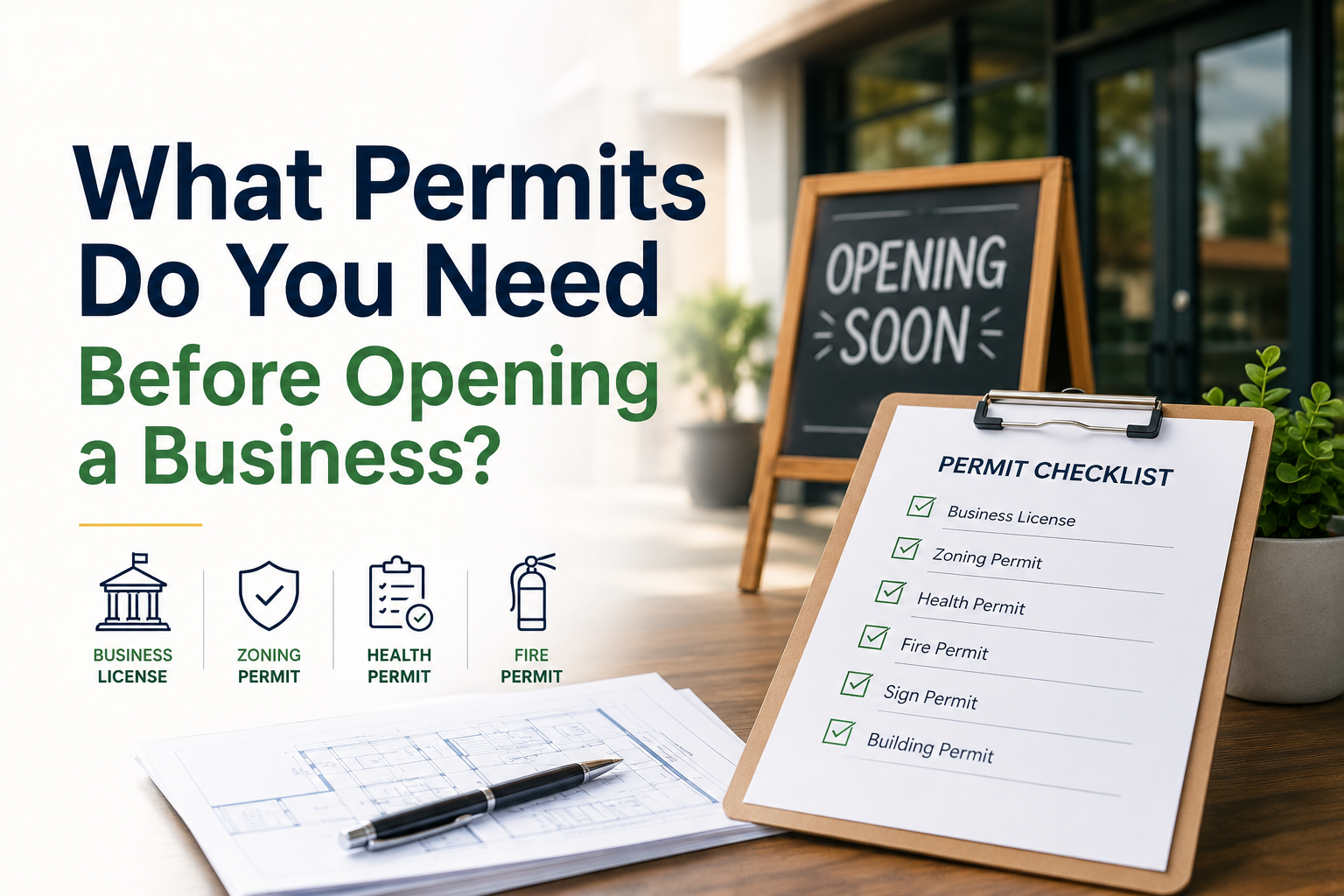
Starting a business is exciting—but before you open your doors, launch your website, or make your first sale, you must secure the proper permits and registrations required by Philippine law.
Many entrepreneurs focus on products, marketing, and operations, only to discover later that missing permits can result in penalties, business closure, or difficulties with tax compliance. Whether you are opening a small online shop, a restaurant, a consultancy, or a corporation, obtaining the correct permits is one of the most important steps toward building a legally compliant and sustainable business.
This guide explains the essential permits and registrations you need before opening a business in the Philippines.
Why Business Permits Matter
Business permits are more than government requirements—they serve as proof that your enterprise operates legally and complies with national and local regulations.
Proper registration helps you:
- Operate legally without risk of closure
- Issue official receipts and invoices
- Open a corporate bank account
- Apply for loans and financing
- Participate in government and private contracts
- Build trust with customers and suppliers
- Avoid penalties, surcharges, and legal complications
Failure to secure the necessary permits may expose business owners to fines, tax assessments, and regulatory sanctions.
Step 1: Register Your Business Name
The first step depends on your chosen business structure.
For Sole Proprietorships
Register your business name with the Department of Trade and Industry (DTI).
A DTI registration grants the owner the right to use a specific business name but does not yet authorize business operations.
Examples:
- Juan Dela Cruz Trading
- Cebu Tech Solutions
- ABC Food Services
For Partnerships and Corporations
Register with the Securities and Exchange Commission (SEC).
The SEC issues the Certificate of Incorporation or Certificate of Registration, officially recognizing the legal existence of the entity.
Step 2: Obtain a Barangay Clearance
After securing your DTI or SEC registration, you must obtain a Barangay Clearance from the barangay where the business will operate.
The barangay verifies:
- The business location
- Compliance with local community regulations
- Zoning compatibility
Requirements may include:
- DTI or SEC registration
- Lease contract or proof of ownership
- Valid identification
- Application forms
The Barangay Clearance is typically required before applying for a Mayor’s Permit.
Step 3: Secure a Mayor’s Permit (Business Permit)
The Mayor’s Permit, also known as the Business Permit, is one of the most important documents required before opening operations.
Issued by the city or municipal government, it confirms that the business complies with local regulations regarding:
- Zoning
- Sanitation
- Public safety
- Fire protection
- Environmental requirements
Common Requirements
- DTI or SEC registration
- Barangay Clearance
- Lease agreement or land title
- Occupancy permit
- Location sketch
- Community Tax Certificate (Cedula)
- Identification documents
The specific requirements vary depending on the local government unit (LGU).
Annual Renewal Requirement
Business permits must generally be renewed every year, usually during the first month of the calendar year.
Failure to renew may result in penalties and surcharges.
Step 4: Register with the Bureau of Internal Revenue (BIR)
Every business in the Philippines must register with the Bureau of Internal Revenue (BIR) before commencing operations.
This registration establishes your tax obligations and authorizes you to issue official receipts or invoices.
Key BIR Requirements
- DTI or SEC registration
- Mayor’s Permit
- Valid identification
- Business address details
- Books of accounts registration
- Invoice or receipt registration
Upon successful registration, the BIR will issue:
- Certificate of Registration (COR)
- Authority to Print (if applicable)
- Registered books of accounts
The COR must be displayed prominently at the business establishment.
Step 5: Register with Government Agencies (If Hiring Employees)
If your business will employ workers, registration with the following government agencies is mandatory:
Social Security System (SSS)
Provides social security benefits for employees.
Employer obligations include:
- Employee enrollment
- Monthly contribution remittance
- Reporting employee information
PhilHealth
Provides healthcare coverage for employees.
Employers are required to:
- Register employees
- Deduct and remit contributions
- Maintain compliance with reporting requirements
Pag-IBIG Fund
Offers housing and savings benefits to employees.
Employers must:
- Register as an employer
- Register employees
- Remit monthly contributions
Failure to comply may result in penalties and employer liability.
Step 6: Obtain Special Permits (If Applicable)
Certain industries require additional licenses beyond standard business registration.
Examples include:
Food Businesses
Restaurants, bakeries, cafes, and food manufacturers may need:
- Sanitary Permit
- Health Certificates for employees
- Food safety certifications
Construction and Engineering Firms
May require permits from:
- Philippine Contractors Accreditation Board (PCAB)
- Local engineering offices
Import and Export Businesses
May need registration with:
- Bureau of Customs (BOC)
- Relevant trade agencies
Financial and Lending Businesses
May require authorization from:
- Securities and Exchange Commission (SEC)
- Bangko Sentral ng Pilipinas (BSP)
- Other regulatory agencies
Travel and Tourism Businesses
May require accreditation from:
- Department of Tourism (DOT)
What About Online Businesses?
A common misconception is that online businesses do not need permits.
In reality, online sellers, freelancers, digital agencies, and e-commerce businesses generally have registration and tax obligations similar to traditional businesses.
Depending on the business structure and operations, online businesses may still need:
- DTI or SEC registration
- BIR registration
- Mayor’s Permit (subject to local government requirements)
- Government agency registrations if hiring employees
Business owners should consult their LGU and tax professional to determine specific requirements.
Common Mistakes New Entrepreneurs Make
Many startups encounter compliance issues because of avoidable mistakes.
Operating Before Registration
Starting business activities before securing permits can expose the owner to penalties and legal risks.
Ignoring Local Government Requirements
Requirements vary among cities and municipalities. What applies in one city may differ in another.
Delayed BIR Registration
Late registration may result in penalties and compliance issues.
Failure to Renew Permits
Annual renewals are essential to maintain legal operations.
Overlooking Employee Registrations
Businesses with employees must comply with labor and social benefit requirements immediately upon hiring.
How Long Does the Process Take?
The timeline depends on:
- Business structure
- Location
- Industry
- Completeness of requirements
For many small businesses, registration can take anywhere from a few days to several weeks.
Proper preparation significantly reduces delays and prevents costly corrections later.
Opening Your Business the Right Way
Launching a business involves more than a great idea—it requires compliance with Philippine laws and regulations. Securing the proper permits before opening protects your investment, strengthens your credibility, and helps ensure smooth operations from day one.
At CBOS, we help entrepreneurs navigate business registration, tax compliance, bookkeeping, payroll, and regulatory requirements so they can focus on growing their business with confidence.
Need help registering your business or securing the required permits? Contact CBOS today and let our experts guide you through every step of the process.
Navigating the business landscape in the Philippines can be both rewarding and intricate. Whether you’re embarking on a new venture or scaling up, ensuring that your corporate endeavors are in line with local regulations is paramount.
At CBOS Business Solutions Inc., we pride ourselves on simplifying these processes for our clients. As a seasoned professional services company, we offer comprehensive assistance with SEC Registration, Visa processing, and a myriad of other essential business requirements. Our team of experts is dedicated to ensuring that your business is compliant, well-established, and ready to thrive in the Philippine market.
Why venture into the complexities of business registration and compliance alone? Allow our team to guide you every step of the way. After all, your success is our commitment.
Get in touch today and let us be your partner in achieving your business goals in the Philippines.
Email Address: gerald.bernardo@cbos.com.ph
Mobile No.: +639270032851
You can also click this link to schedule a meeting.
Leave a Reply