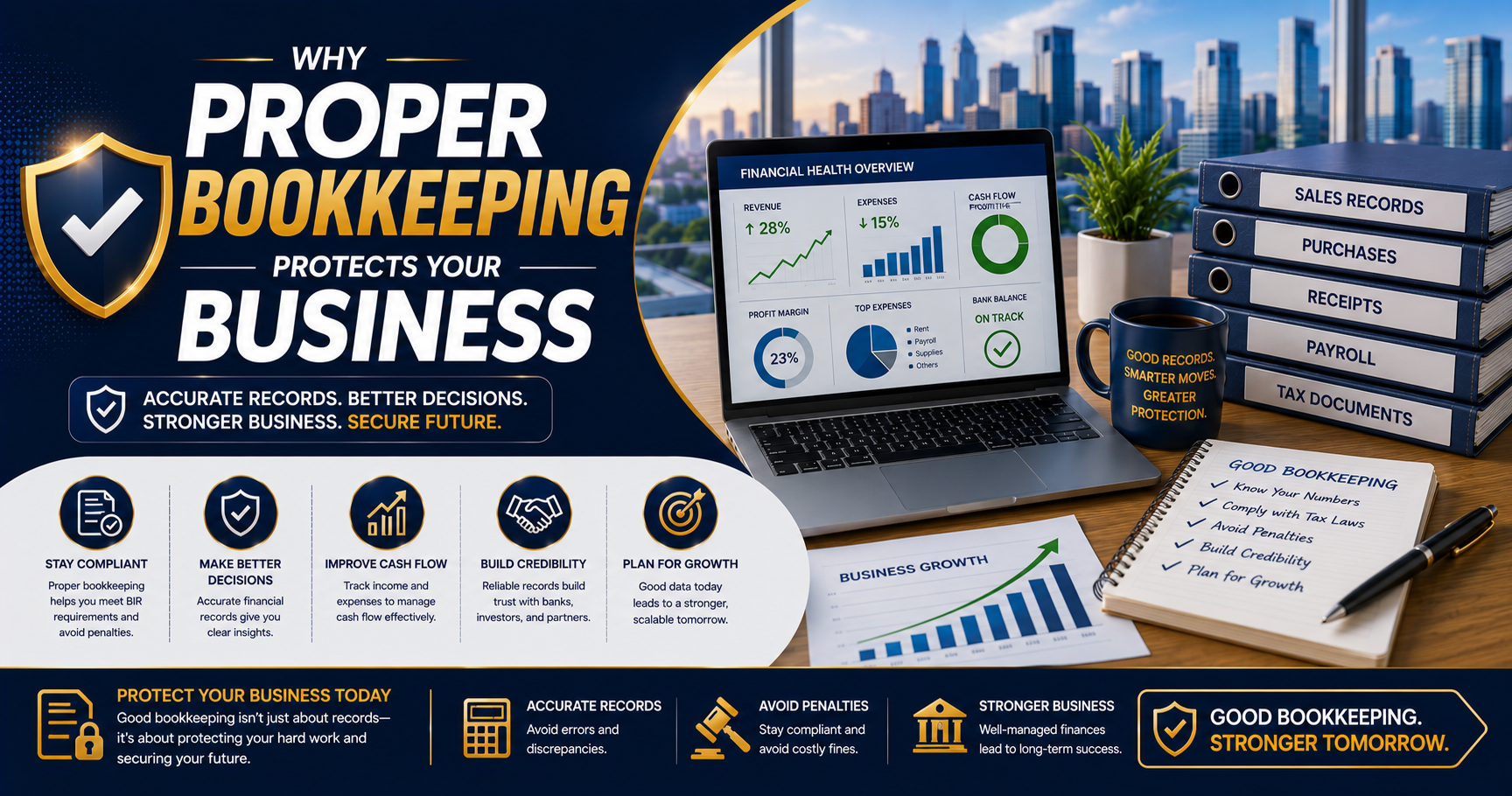
Many business owners view bookkeeping as a simple administrative task—something done only for taxes, reports, or compliance requirements. In reality, proper bookkeeping is one of the strongest legal, financial, and operational protections a business can have.
A business with weak bookkeeping may struggle with taxes, audits, cash flow, permits, investor confidence, and even legal disputes. On the other hand, businesses with organized records are often more stable, more credible, and easier to grow.
In the Philippines, proper bookkeeping is not just about accounting—it is part of responsible business management and compliance.
This guide explains why proper bookkeeping protects your business and why every company, from startups to large corporations, should take it seriously in 2026.
What Is Bookkeeping?
Bookkeeping refers to the systematic recording and organization of business transactions.
This commonly includes:
- Sales records
- Expense tracking
- Payroll records
- Bank reconciliations
- Invoice and receipt records
- Financial transaction monitoring
Good bookkeeping creates reliable financial information for decision-making and compliance.
Why Bookkeeping Matters Beyond Taxes
Many entrepreneurs think bookkeeping matters only during tax season.
In reality, bookkeeping affects:
- Legal compliance
- Business stability
- Cash flow visibility
- Investor confidence
- Operational planning
- Audit readiness
Weak records create hidden risks that often appear during growth or financial stress.
1. Proper Bookkeeping Supports Tax Compliance
Businesses registered with the Bureau of Internal Revenue generally need accurate financial records to support:
- Tax filings
- Expense deductions
- Revenue reporting
- VAT or percentage tax compliance where applicable
- Audit responses
Poor bookkeeping increases the risk of:
- Filing mistakes
- Penalties
- Open cases
- Tax assessments
Accurate books support cleaner compliance.
2. Bookkeeping Helps Prevent Cash Flow Problems
Many businesses fail not because they are unprofitable—but because they lose control of cash flow.
Good bookkeeping helps owners track:
- Income and expenses
- Outstanding receivables
- Upcoming obligations
- Payroll requirements
- Tax liabilities
Without reliable numbers, business decisions become guesswork.
3. Organized Records Protect During Audits
Government reviews or audits may involve agencies such as the:
- Bureau of Internal Revenue
- Securities and Exchange Commission
Businesses with organized books can usually respond more efficiently.
Weak records often create:
- Delays
- Unsupported expenses
- Inconsistent filings
- Additional scrutiny
Preparation reduces stress.
4. Bookkeeping Protects Against Internal Problems
Strong bookkeeping also protects against operational risks such as:
- Untracked expenses
- Unauthorized transactions
- Payroll inconsistencies
- Inventory losses
- Financial misunderstandings among partners
Reliable records improve accountability.
5. Banks and Investors Expect Proper Records
When applying for:
- Loans
- Credit facilities
- Investment funding
- Business partnerships
financial records often become critical.
Weak bookkeeping may signal:
- Poor management
- Higher financial risk
- Lack of operational discipline
Strong books increase credibility.
6. Proper Records Support Business Growth
As businesses grow, complexity increases.
Good bookkeeping supports:
- Expansion planning
- Budgeting
- Profit analysis
- Hiring decisions
- Strategic investment planning
Growth without financial visibility is risky.
7. Bookkeeping Helps Separate Personal and Business Finances
Many small businesses mix personal and company expenses.
This creates problems involving:
- Tax reporting
- Audit explanations
- Cash flow confusion
- Ownership disputes
Separate and organized records help protect the business legally and financially.
8. Proper Bookkeeping Supports Corporate Compliance
Corporations registered with the Securities and Exchange Commission often need organized financial information for:
- Corporate records
- Governance reviews
- Shareholder reporting
- Annual compliance obligations
Financial transparency strengthens governance.
Common Signs of Weak Bookkeeping
- Missing receipts
- Delayed record updates
- Unknown tax obligations
- Unreconciled bank accounts
- Confusing cash flow
- Inconsistent reports
- Personal and business funds mixed together
These warning signs should be addressed early.
Why Small Businesses Need Good Bookkeeping Too
Some entrepreneurs think bookkeeping only matters for large corporations.
In reality, small businesses are often more vulnerable because:
- Margins are tighter
- Cash flow is more sensitive
- One penalty can create serious stress
- Owners personally absorb many risks
Strong bookkeeping protects businesses of all sizes.
Best Practices for Better Bookkeeping
✔ Record transactions consistently
✔ Separate personal and business finances
✔ Maintain organized digital and physical records
✔ Reconcile bank accounts regularly
✔ Monitor filing deadlines
✔ Keep copies of invoices and receipts
✔ Review financial reports regularly
Consistency matters more than complexity.
Final Thoughts
Proper bookkeeping is not just about compliance—it is about protecting your business from unnecessary risk.
Strong bookkeeping helps protect:
- Tax compliance
- Cash flow
- Audit readiness
- Investor confidence
- Operational stability
- Long-term growth
The practical lesson is simple:
A business that understands its numbers is easier to protect, manage, and grow.
Because in business, organized records do more than satisfy regulators—they protect the future of the company itself.
Navigating the business landscape in the Philippines can be both rewarding and intricate. Whether you’re embarking on a new venture or scaling up, ensuring that your corporate endeavors are in line with local regulations is paramount.
At CBOS Business Solutions Inc., we pride ourselves on simplifying these processes for our clients. As a seasoned professional services company, we offer comprehensive assistance with SEC Registration, Visa processing, and a myriad of other essential business requirements. Our team of experts is dedicated to ensuring that your business is compliant, well-established, and ready to thrive in the Philippine market.
Why venture into the complexities of business registration and compliance alone? Allow our team to guide you every step of the way. After all, your success is our commitment.
Get in touch today and let us be your partner in achieving your business goals in the Philippines.
Email Address: gerald.bernardo@cbos.com.ph
Mobile No.: +639270032851
You can also click this link to schedule a meeting.
Leave a Reply